


A crate cover doesn’t usually feel like a decision that deserves much thought. It’s easy to assume it’s just there to soften the look of a wire crate, maybe add a little privacy, and call it done. But once a crate becomes part of daily life, the quality of the cover starts to matter in ways most people don’t expect.
A poorly made cover shows its flaws fast. It shifts out of place, traps heat, blocks airflow where it shouldn’t, and never quite looks right in the room. Over time, it stops feeling like a helpful accessory and starts feeling like another thing you have to manage. On the other hand, a well-made cover quietly does its job. It stays put. It washes well. It supports calm, comfort, and visual order without calling attention to itself.
Knowing what separates those two outcomes comes down to a few specific details. Fit, fabric, construction, and thoughtful design choices all play a role in whether a crate cover works seamlessly or becomes a source of frustration. Once you understand what actually matters, choosing the right one becomes much simpler — and far more satisfying in the long run.
Why Quality Matters More With Crate Covers Than People Expect
We tend to scrutinize the quality of a dog bed because we know our dog sleeps on it. We check the ingredients of dog food because we know they eat it. But the crate cover surrounds them. It dictates the temperature, light levels, and air quality of their “bedroom.”
A Crate Cover Isn’t Decorative—It’s Functional Equipment
It’s tempting to view a cover purely as a decor item—a way to make a wire box look less like a cage. While that is a valid benefit, a high-quality dog crate cover is first and foremost a tool for behavioral health and safety.
Its job is to regulate stimuli. It needs to block visual triggers (like the cat walking by) to reduce anxiety. It needs to allow for proper ventilation to prevent overheating. It needs to stay securely in place so it doesn’t become a chewing hazard. When you start seeing it as equipment rather than just a “topper,” the criteria for buying change. You stop looking for the cutest print and start looking for the best construction.
Why Low-Quality Covers Show Their Flaws Quickly
The problem with many generic covers is that they are built for the shelf, not the home. They look fine in a package, but once they are subjected to the realities of dog ownership—paws, noses, shedding, sunlight, and washing machines—they degrade fast.
Cheap dog crate cover problems usually appear within the first few months. The ties rip off because they were single-stitched. The fabric fades from a rich black to a rusty grey because it wasn’t UV resistant. The zipper creates a gap because it shrank in the wash. Crate cover durability issues lead to a cycle of replacement. You might buy three $30 covers in the span of time that one high-quality $150 cover would have lasted.
Fit: The Foundation of a Good Crate Cover
If a cover doesn’t fit, nothing else matters. The fabric could be woven from gold thread, but if it doesn’t sit squarely on the frame, it is a bad cover. Fit is the primary indicator of quality.
Why Proper Fit Affects Safety, Comfort, and Appearance
A dog crate cover fit should be precise. It shouldn’t be a tent that floats over the crate, nor should it be a wetsuit that you have to wrestle onto the frame.
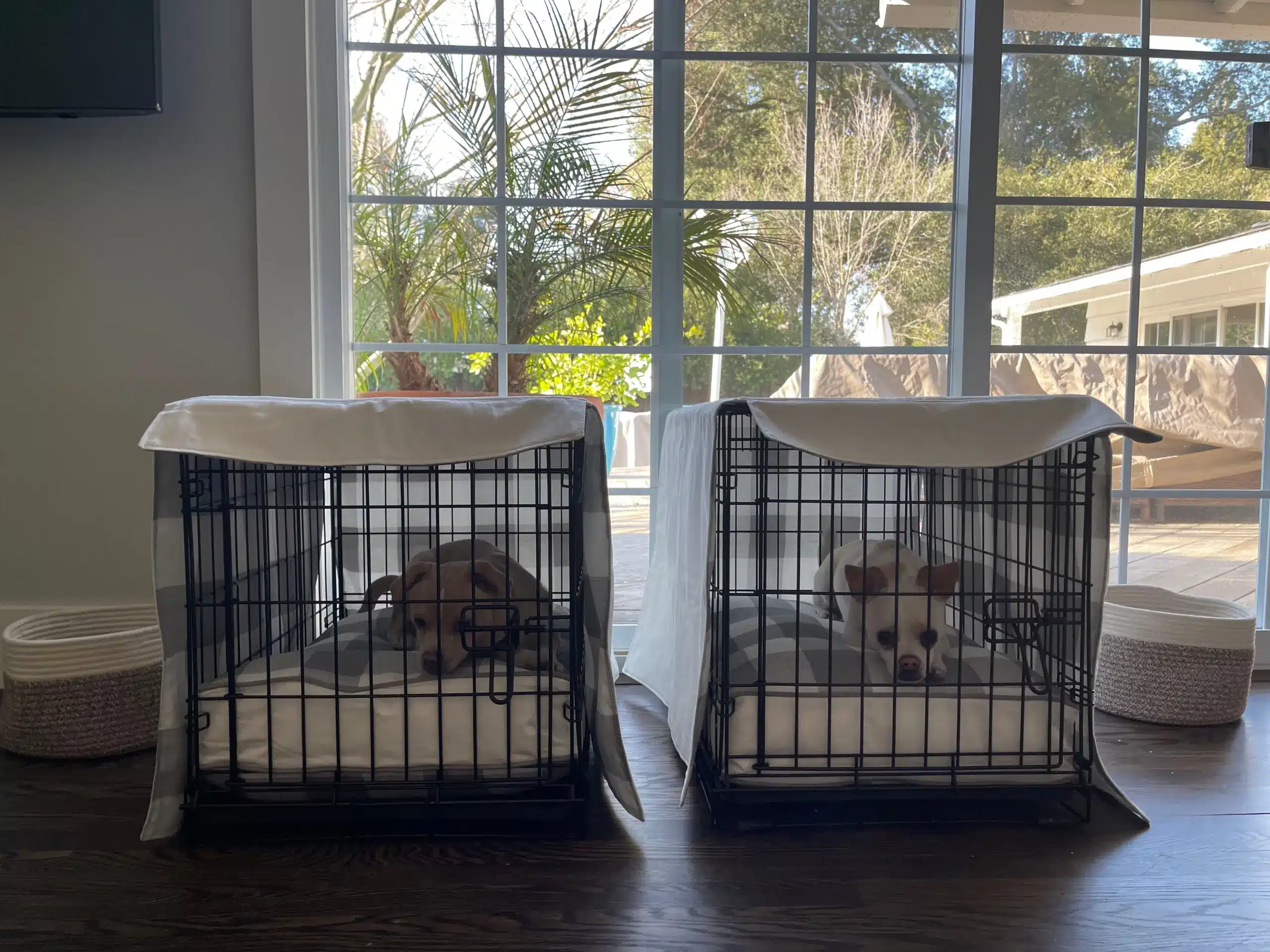
Safety is the biggest concern here. A cover that is too loose can slide forward, blocking the door or the ventilation gaps. Excess fabric pooling on the floor is a trip hazard for you and a temptation for a puppy to pull and chew. Comfort is next; a fitted cover creates a stable, consistent “den” feel. Finally, appearance: a custom fit crate cover looks like intentional furniture. A sloppy fit looks like a sheet thrown over a pile of laundry.
Common Fit Problems to Watch For
When shopping, look closely at user photos, not just the professional marketing shots. Watch for the “sag.” Does the roof of the cover dip in between the wire bars? This happens when the fabric is too thin or the dimensions are generic.
Watch for the “high-water” look—covers that stop two inches above the floor, exposing the plastic tray. This is often a sign of a one size fits all crate cover that is trying to accommodate different tray heights but failing. Also, look for corners that flare out. A well-fitted cover should have crisp, 90-degree corners that hug the frame.
How to Tell If a Cover Is Actually Well-Fitted
A tailored dog crate cover relies on specific measurements, not categories like “Large” or “Extra Large.” If a product description simply says “Fits most 36-inch crates,” be skeptical.
A high-quality cover is designed with structural seams that align with the edges of the crate. It uses gravity and precise patterning to hold its shape. When you see a made to measure crate cover, you will notice that the panels lie flat. The zippers (if present) run smoothly without bunching. The proportions feel balanced. It quiets the visual noise of the wire bars rather than adding to the clutter.
Fabric: More Than Just How It Looks
The material is the workhorse of the cover. It needs to handle friction, light, moisture, and washing.
Durability, Breathability, and Washability in Real Homes
The best fabric for dog crate cover use is typically a medium-to-heavyweight natural fiber, like cotton canvas or duck cloth. These fabrics have “guts”—they are thick enough to block light and hold their shape, but they breathe.
Durability is key. Dogs nest; they might scratch at the side of the crate before settling down. A durable dog crate cover needs to withstand this abrasion without tearing. Washability is non-negotiable. Your dog will eventually have an upset stomach, or muddy paws, or simply that “dog smell.” A washable dog crate cover must be able to go through a machine cycle without shrinking three sizes or falling apart at the seams.
Why Fabric Choice Affects Airflow and Comfort
This is where natural fibers shine. A breathable dog crate cover allows heat and moisture to escape through the weave of the fabric.
Synthetic fabrics, often found in cheaper covers, essentially wrap the crate in plastic. They trap heat and humidity, creating a stuffy, uncomfortable environment. If you put your hand inside a crate covered in polyester on a warm day, it will feel significantly warmer than the room. If you do the same with a canvas cover, the temperature difference should be negligible. Safe crate cover fabric prioritizes this air exchange.
Red Flags in Low-Quality Fabrics
Avoid anything described as “microfiber,” “polyester blend,” or simply “synthetic.” These are often code for cheap, heat-trapping materials.
Be wary of fabrics that look shiny or crinkly. These are usually noisy when the dog moves, which can startle a nervous pet. Synthetic crate cover problems also include static electricity, which attracts dog hair like a magnet, making the cover look permanently dirty. If the fabric feels thin, flimsy, or slippery, it’s likely a low-quality choice that will cause crate cover overheating issues.
Construction: Where Quality Shows Up Over Time
You can often tell the quality of a garment by turning it inside out. The same is true for crate covers. The way the pieces are put together determines how long the item will last.
Stitching, Seams, and Reinforcement Points
Look at the stitching. Is it a single, thin line of thread? Or is it a double-stitch or a surged edge? Crate cover construction relies on strong seams because the fabric is under tension at the corners.
High-quality covers will have reinforcement at stress points—specifically where the ties or snaps attach to the main body. This is where most cheap covers fail; you go to tie the panel roll-up, and the ribbon comes right off in your hand. Dog crate cover stitching should be heavy-duty, using thread that won’t rot or snap.
Why Clean Finishing Matters for Longevity
“Finishing” refers to how the raw edges of the fabric are handled. In a high quality crate cover, you won’t see raw, fraying edges inside the cover. Hems should be double-folded and stitched down.
This matters because fraying edges unravel in the washing machine. A cover with poor finishing might look okay when new, but after one wash, it becomes a tangled mess of loose threads. Durable crate cover design anticipates the stress of laundry.
How Poor Construction Affects Daily Use
When construction is poor, daily use becomes annoying. Zippers that snag because they were sewn too close to the fabric fold are a constant frustration. Ties that are too short to tie a proper bow make securing the door a chore.
Crate cover sagging is often a construction issue—if the top panel isn’t cut on the grain correctly, it will stretch and distort over time. DIY crate cover problems often stem from a lack of structural knowledge, resulting in covers that look homemade in the worst way. Professional craftsmanship ensures the cover works smoothly every single day.
Design Details That Separate Good From Great
Great design is often invisible. It just works. But when you are shopping, you need to look for the specific features that make that ease of use possible.
Panel Placement, Door Access, and Ease of Use
Functionality is king. A good cover allows you to access the crate doors easily. If you have a side-door crate, the cover must have a side panel that opens.
Look for independent panels. You should be able to roll up the front, the sides, or both, depending on the situation. Crate cover functionality is about adaptability. Can you create a dark cave for sleeping? Can you create a breezy, open-air tunnel for a hot afternoon? Dog crate cover panels should give you these options without requiring you to remove the entire cover.
Why Simpler Designs Often Perform Better
Beware of covers with too many gimmicks—pockets for toys, windows with plastic screens, elaborate ruffles. These often add bulk without adding value.
A minimal dog crate cover is usually superior because there is less to go wrong. A simple, clean design with high-quality fabric will always outperform a complicated design made of cheap materials. Intentional crate design focuses on the silhouette and the textile. A timeless crate cover blends into your home; it doesn’t scream for attention.
Customization Options That Actually Matter
“Custom” can mean many things. Sometimes it just means you get to put a name on it. But true quality customization is about mechanics, not just monograms.
Fit Customization vs Cosmetic Customization
Cosmetic customization (like embroidery) is fun, but fit customization is vital. A custom dog crate cover maker should ask for the dimensions of your specific crate.
This ensures that the cover clears the floor perfectly and that the door openings align with your crate’s latch mechanisms. Personalized crate cover options should start with the geometry of the crate. If the “custom” option is just selecting a color for a standard size, you aren’t getting the full benefit of custom work.
Why Fabric and Coverage Choices Are More Important Than Extras
The ability to choose your fabric weight or weave is a huge quality indicator. Being able to say, “I need a breathable canvas because I live in Florida,” or “I need a heavy twill because my dog is reactive,” is what makes a made to order crate cover worth the investment.
Custom crate cover options should allow you to solve problems. Do you need the back panel to be open for airflow against a wall? Do you need snaps instead of ties because your dog chews ribbons? These functional choices are far more valuable than decorative extras.
Airflow and Safety Checks Every Buyer Should Make
Never compromise on safety. A crate cover changes the environment inside the crate, and you need to ensure that change is positive.
How to Evaluate Ventilation in a Crate Cover
When looking at a cover, ask yourself: Where does the air go? If the cover is zipped down on all four sides, is the fabric breathable?
Ideally, a cover should allow for “passive ventilation” even when closed. This means there might be slight gaps at the corners or the hemline that allow air to be drawn in from the bottom. Even better are covers designed with roll-up sides. Crate cover ventilation is critical. If a cover seals the crate like a ziplock bag, it is dangerous.
Common Safety Oversights in Low-Quality Covers
Watch out for small, detachable parts. Cheap buttons or plastic toggles can be chewed off and swallowed. A high-quality cover typically uses secure, sewn-in ties or heavy-duty snaps that are difficult for a dog to remove.
The blanket vs crate cover debate is relevant here too. A blanket is a safety risk because it is loose; it can be pulled through the bars. A fitted cover is safer because it is taut. Dog crate cover safety issues often arise from loose fabric. Ensure the design you choose sits close to the frame and doesn’t offer loose folds for a puppy to grab.
Longevity: Thinking Beyond the First Few Months
Quality is an investment in time. You are paying upfront to avoid paying again later.
How a Quality Cover Holds Its Shape After Washing
Cotton shrinks. It’s a fact of nature. High-quality manufacturers anticipate this. They either pre-shrink their fabric or cut the patterns slightly larger to account for the first wash.
A long lasting dog crate cover will fit just as well after its tenth wash as it did after its first. Washable crate cover durability depends on this foresight. If a brand doesn’t mention pre-shrinking or washability, proceed with caution.
Why Replacing Covers Gets Expensive Over Time
Let’s do the math. A cheap $40 cover lasts six months before the zipper breaks or it looks tattered. Over the 12-year life of a dog, that’s 24 covers. That’s nearly $1,000 spent on trash.
A custom crate cover value proposition is simple: Buy it once (or maybe twice, if you change decor). A $150 cover that lasts 10 years costs you $15 a year. Crate cover replacement cost is a hidden tax on cheap goods. Investing in quality is actually the frugal choice in the long run.
Store-Bought vs Custom: How Quality Differs in Practice
The marketplace is divided between mass-produced and handmade. Understanding the manufacturing constraints of each helps you set realistic expectations.
Where Store-Bought Covers Typically Compromise
Store-bought covers are driven by margin. They need to be light to ship cheaply. They need to fit “most” crates to sell in volume.
This leads to the store bought crate cover issues we’ve discussed: thin polyester fabric, baggy sizing, and weak stitching. Mass produced crate cover options prioritize the logistics of retail over the needs of the dog. They are designed to be sold, not necessarily to be lived with for a decade.
Why Custom Covers Check More Quality Boxes
Custom makers are driven by reputation and specific customer needs. A custom dog crate cover benefits from human oversight. A person is cutting the fabric, not a machine. A person is checking the seams.
Because they are made to order, there is no inventory cost to managing different sizes. This allows for the tailored crate cover fit that mass production can’t justify. A high quality custom crate cover is built to a standard of furniture, not fast fashion.
How to Evaluate a Crate Cover Before You Buy
Ready to shop? Use this section as your checklist. Whether you are in a pet store or browsing a custom maker’s site, these are the things to look for.
Questions Worth Asking About Fit, Fabric, and Construction
- Does it specify the exact dimensions it fits? Avoid generic “Large.”
- What is the fiber content? Look for 100% cotton, canvas, or denim.
- How does it attach? Look for reinforced ties or snaps.
- Can panels be operated independently? Look for versatility.
- Is it machine washable? And will it shrink?
These questions form your crate cover buying checklist. If the product description doesn’t answer them, ask.
What Product Photos and Descriptions Often Don’t Show
Photos can be deceiving. A cover might look smooth in a photo because it was pinned or taped for the shoot. Look for photos submitted by real customers.
Does the fabric look wrinkled and thin in user reviews? Does it look see-through? Crate cover quality indicators are often found in the background of user photos. Look at the corners—do they droop? Look at the floor—is there excess fabric? Be a detective about dog crate cover details.
When Investing in Quality Makes the Most Sense
While everyone deserves a good product, there are specific scenarios where skimping on quality is a mistake you will feel daily.
Long-Term Crate Use in Shared Living Spaces
If the crate is in your living room, dining room, or bedroom, it is part of your interior design. A cheap cover will lower the aesthetic value of the entire room.
In a dog crate cover living room scenario, the cover needs to hold its own against your sofa and curtains. Crate cover home décor integration requires high-quality textiles. If you have to look at it every day, you should enjoy looking at it.
Dogs With Specific Comfort or Environmental Needs
If your dog has anxiety, a thin cover that lets in shadows and light won’t help. If your dog gets hot, a polyester cover is dangerous.
Custom crate cover use cases for special needs are compelling. A crate cover for anxious dogs needs to be essentially blackout curtains for a crate. Crate cover airflow design is critical for health. In these cases, quality isn’t a luxury; it’s a medical necessity for the dog’s well-being.
Common Questions About High-Quality Dog Crate Covers
What Makes a Dog Crate Cover “High Quality”?
High quality is defined by three things: specific fit (no sagging), natural breathable materials (like cotton canvas), and durable construction (reinforced seams and washability).
Is Custom Always Better Than Store-Bought?
For fit and longevity, almost always yes. Store-bought covers are designed for general use and low cost. Custom covers are designed for specific crates and long-term wear. However, for temporary travel or short-term fostering, a store-bought cover may be sufficient.
How Long Should a Well-Made Crate Cover Last?
A high-quality canvas crate cover should last for years, often the lifetime of the dog, provided it is cared for correctly. It should withstand regular washing and daily wear without falling apart.
Which Features Actually Matter—and Which Don’t?
Matter: Breathability, precise fit, machine washability, independent panel access.
Don’t Matter: Excessive pockets, decorative ruffles, “universal” sizing, synthetic “sheen.”
Finding the right crate cover is about more than just measurements—it’s about understanding how your dog lives and how you want your home to feel. By prioritizing fit, fabric, and function, you can find a solution that brings calm to your pet and style to your space.
Give Your Pet the Comfort They Deserve
Crafted by hand, built to last, and designed to match your home. Create the perfect bed for your best friend.
Customize Their Bed
0 Comment