


When you decide to bring a crate cover into your home, the first thing you likely think about is the color. Will it match the sofa? Will it clash with the rug? While aesthetics are undeniably important—especially for those of us who believe pet gear shouldn’t ruin a room’s design—the material you choose carries far more weight than just its visual appeal. The fabric is the workhorse of the cover. It dictates how the cover hangs, how long it lasts, how easy it is to clean, and, perhaps most importantly, how comfortable your dog feels inside.
Choosing the right material is a balancing act. You need something tough enough to withstand a dog’s daily routine but soft enough to look inviting in a living space. You need a weave that blocks enough light to create a cozy den but remains breathable enough to keep air circulating safely. It’s a decision that sits right at the intersection of interior design and pet care.
Why Fabric Choice Has More Impact Than Most Pet Owners Realize
It is easy to underestimate the role of fabric until you are living with the wrong one. A cheap, synthetic cover might look fine in a photo, but in practice, it can become a source of frustration. The material determines the atmosphere inside the crate. Does it trap heat, turning the crate into a stifling box in the summer? Does it crinkle loudly every time your dog shifts weight, startling them out of a nap? Does it collect every stray hair and hold onto odors even after a wash?
The fabric is the interface between your dog’s private space and the rest of your home. A high-quality dog crate cover fabric does several jobs at once. It dampens the ambient noise of a busy household, softening the sounds of the television or the dishwasher. It creates a visual barrier that feels substantial, not flimsy, helping reactive dogs settle down faster. On the flip side, the wrong material can exacerbate anxiety. Flimsy fabrics that flutter with every draft can be unsettling, while materials that don’t breathe well can make the crate uncomfortable, causing your dog to become restless.
Beyond the dog’s experience, the material impacts your experience as a homeowner. We’ve all seen pet products that look tired and worn after a month. Cheap fabrics pill, fade, and lose their shape. They start to look like an afterthought—a rag thrown over a box—rather than a piece of intentional décor. Choosing the best material for a dog crate cover is about investing in longevity. It’s about selecting a textile that ages gracefully, holds its structure, and continues to look crisp and tailored even after a year of use. It turns the crate from an eyesore into a piece of furniture that feels permanent and considered.
Finding the Balance Between Breathability and Structure
One of the most critical functional aspects of a crate cover is airflow. Dogs regulate their body temperature differently than humans, and a crate that lacks proper ventilation can quickly become dangerous. However, you also want a cover that holds its shape and looks tidy. This creates a tension between needing a light, airy fabric and wanting a crisp, structured look. Finding the middle ground is key.
Many mass-produced covers use thin, polyester blends to achieve breathability, but these often lack structure. They drape poorly, sagging in the middle and bunching at the corners. They look messy. Conversely, a heavy upholstery vinyl might look sleek and structured, but it can seal off the crate, blocking essential airflow. The goal is to find a breathable dog crate cover that still has enough weight to hang beautifully.
How the Right Fabric Supports Airflow Without Losing Shape
The secret lies in the weave and the fiber content. Natural fibers like cotton and linen are inherently more breathable than synthetics. They allow air to pass through the fibers themselves, not just the gaps between them. A medium-weight cotton canvas or a sturdy cotton twill is often the “Goldilocks” solution.
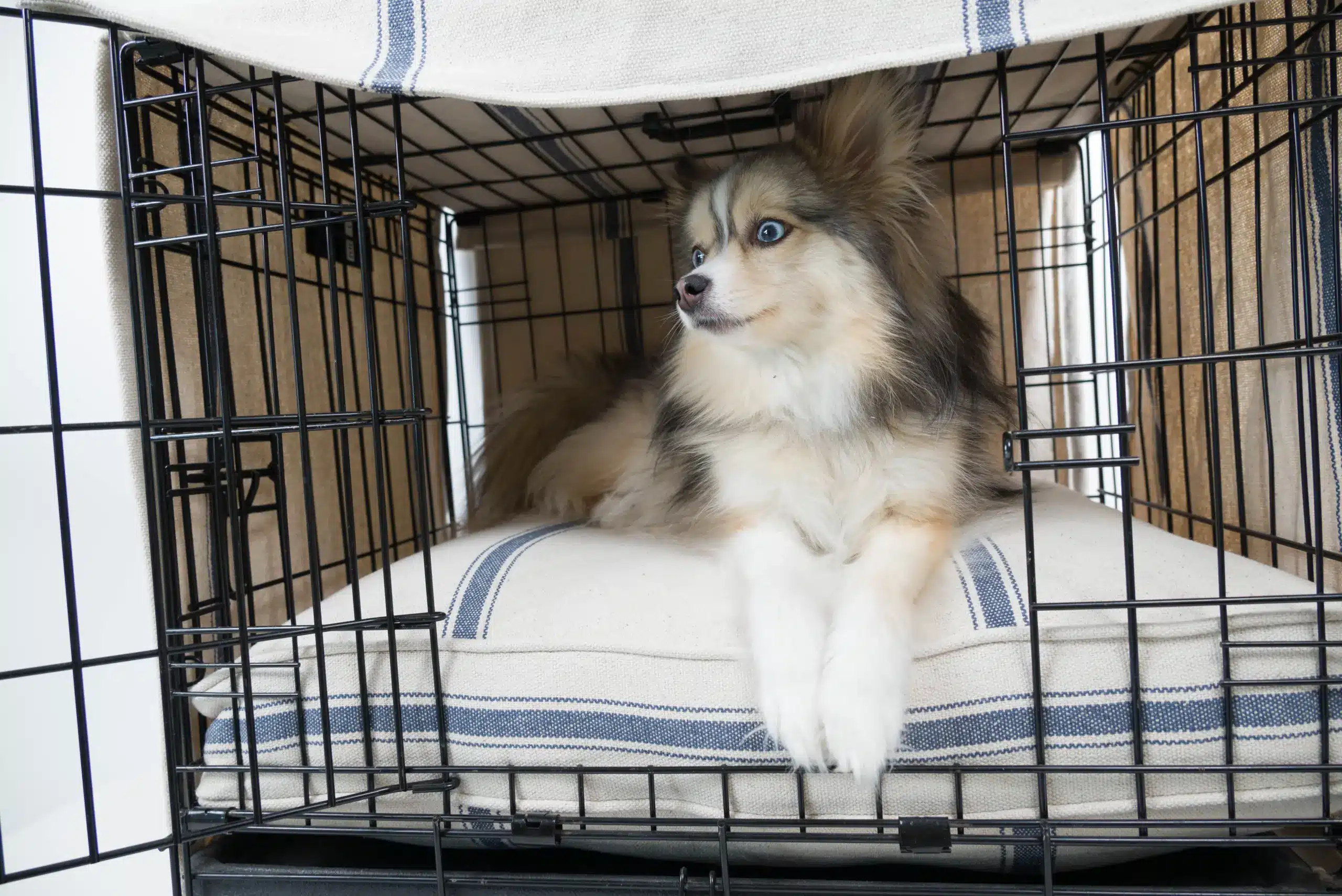
Canvas and Twill: These fabrics have a tight enough weave to block light and provide visual privacy, but they are porous enough to allow for excellent air circulation. Because they are slightly heavier, they have a natural stiffness. They don’t cling to the crate bars; instead, they create straight, clean lines that mimic the look of a tailored slipcover. This creates a structured dog crate cover that looks intentional.
Linen Blends: Linen is famous for its breathability. A 100% linen cover might wrinkle easily, but a high-quality linen-cotton blend offers the best of both worlds: the airflow and texture of linen with the structure and wrinkle resistance of cotton.
Avoiding the “Tent” Effect: A fabric with a good body will hang straight down from the top of the crate. Flimsy fabrics tend to cave in between the bars, creating a “tenting” effect that looks sloppy and reduces the interior space for your dog. A structured fabric stays rigid enough to skim over the bars, maintaining the crate’s rectangular silhouette and keeping the interior spacious and airy. When you prioritize structure alongside breathability, you ensure dog crate cover airflow remains optimal without sacrificing the polished aesthetic your home deserves.
Durability and Washability Matter More in Daily Life Than on Day One
When you first put a new cover on a crate, it looks pristine. But life with pets is rarely pristine. There will be muddy paws, wet noses, occasional sickness, and the inevitable shedding. If you choose a delicate silk or a dry-clean-only velvet, you are setting yourself up for failure. Durability and washability are not just practical bonuses; they are essential requirements for any item that lives in a pet-friendly home.
Durability isn’t just about whether the fabric rips. It’s about abrasion resistance. Dogs often “nest” before laying down, scratching at their bedding or the sides of the crate. They might nudge the cover with their nose or lean against it while sleeping. A durable dog crate cover needs to withstand this daily friction without thinning or developing holes. It also needs to resist pilling. Fabrics that pill quickly look old and worn out, turning your stylish upgrade into something you want to hide.
What to Look for in Fabrics That Can Handle Pets, Messes, and Repeated Washing
When evaluating materials, look for terms like “heavyweight,” “duck cloth,” “canvas,” or “denim.” These are weaves designed for utility. They are tightly woven, which helps prevent dog nails from snagging the threads.
The Washability Factor: Always check the care instructions. “Spot clean only” is rarely realistic for a dog crate cover. You want a washable dog crate cover that can be thrown in the machine when accidents happen. However, not all washable fabrics are created equal. Natural fibers like cotton can shrink. High-quality covers are often made from pre-shrunk fabrics or designed with slightly generous allowances to accommodate minor shrinkage over time.
Stain Release: Some weaves are more prone to holding onto stains than others. A smooth cotton twill is often easier to wipe down between washes than a nubby, textured boucle, which can trap dirt and hair deep in the fibers.
Colorfastness: Since you will be washing the cover, you want a fabric that holds its dye. A faded navy blue that turns into a washed-out grey after three cycles will ruin the look of your room. High-quality dyed canvas and twill tend to retain their depth of color better than cheaper printed cottons.
Easy Care: An easy care dog crate cover fabric doesn’t mean it never wrinkles—natural cotton always wrinkles a bit—but it means the fabric is robust enough to be ironed or steamed back to perfection, or sturdy enough that the wrinkles fall out naturally after a day on the crate. The goal is a material that rebounds from the chaos of daily life, looking fresh with minimal effort on your part.
Light Control Comes Down to Weight, Weave, and Texture
One of the primary reasons pet owners use crate covers is to help their dogs settle. Creating a darker, den-like environment taps into a dog’s natural instincts, signaling that it is time to rest. However, “dark” doesn’t have to mean pitch black, and achieving the right level of light control depends entirely on the material you choose. A thin sheet might block a view, but it won’t block light. If you turn on a lamp nearby, a thin fabric will glow, which can be stimulating rather than calming.
The effectiveness of a dog crate cover for light control is determined by the density of the fabric (the weave) and its physical weight. A loose weave lets light filter through the tiny gaps between threads. A tight weave stops it. This is why a lightweight, tightly woven poplin might block more light than a heavy, loosely woven knit. However, in most cases, weight and weave go hand in hand. Heavier upholstery fabrics generally have tighter weaves and offer superior light blocking.
How Fabric Thickness and Texture Affect Calm and Comfort
The sensory experience inside the crate is defined by the fabric’s thickness and surface texture.
Visual dampening: For an anxious dog, seeing movement through the crate bars—shadows walking past, the flicker of a TV screen—can be a trigger. A thicker fabric acts as a solid wall. It eliminates these visual ghosts. If you are looking for a crate cover for anxious dogs, prioritize heavy canvas, denim, or lined options. These materials create a consistent, predictable visual environment inside the crate.
Sound absorption: While no fabric is soundproof, dog crate cover texture plays a role in acoustics. Hard, smooth surfaces reflect sound. Soft, textured surfaces absorb it. A crate covered in a textured, heavyweight fabric will sound different inside than one covered in thin plastic or polyester. It muffles the sharp edges of household noise—the click of claws on the floor, the clang of a dropped spoon. This acoustic softening contributes to a sense of safety and calm.
Temperature perception: Texture also affects how cozy the crate feels. A cold, slick synthetic fabric can feel uninviting. A fabric with a natural, matte texture, like brushed cotton or linen, feels warmer and more organic. It mimics the feel of natural den materials better than shiny plastics. When a dog leans against the side of the crate, the tactile feedback from a quality fabric is more comforting, reinforcing the crate as a safe haven rather than a cage.
How Different Materials Change the Way a Crate Feels in a Room
The fabric you choose for your crate cover is a major interior design decision. A 36-inch or 42-inch crate is a large object. When you cover it, you are essentially adding a large block of color and texture to your room. The material determines whether that block feels like a bulky intrusion or a harmonious addition.
Think about the other textiles in your room. You likely have curtains, throw pillows, rugs, and upholstery. A successful crate cover should speak the same language as these items. If your room is full of rich velvets and heavy wools, a flimsy, shiny polyester crate cover will stick out like a sore thumb. It will look cheap by comparison. Conversely, if your style is breezy and coastal with lots of linen and light woods, a heavy, dark industrial canvas might feel too aggressive and utilitarian.
Why Some Fabrics Blend In While Others Always Feel Temporary
The difference between a cover that blends in and one that looks temporary often comes down to “visual weight” and sheen.
Matte vs. Shiny: In general, matte fabrics look more expensive and permanent than shiny ones. High-gloss synthetics catch the light in a way that draws the eye, highlighting wrinkles and imperfections. They scream “plastic.” Natural fibers like cotton, linen, and canvas have a matte finish that absorbs light. This helps the crate visually recede into the room. A stylish dog crate cover usually relies on these matte, natural textures to look sophisticated.
Visual Weight: A fabric needs to have enough visual weight to ground the crate. Flimsy fabrics look like temporary dust covers. Substantial fabrics look like upholstery. When you look at a sofa, the fabric looks taut and permanent. You want that same effect for your crate cover. A fabric with a bit of heft helps the cover hang straight, creating architectural lines that mirror your furniture.
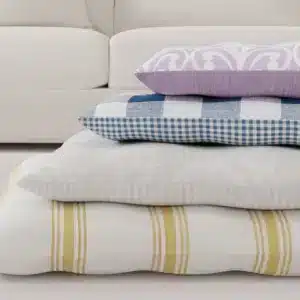
Texture Matching: A crate cover that matches home décor often does so through texture. If you have a linen sofa, a linen-blend crate cover is a natural partner. If you have a leather chair and heavy rugs, a sturdy canvas or denim holds its own against those strong textures. You don’t always need to match the color perfectly—in fact, layering different shades of the same color family can be very chic—but getting the texture right is crucial for making the crate feel like it belongs.
Why Custom Dog Crate Covers Offer Better Control Over Materials
When you walk into a big-box pet store, your material choices are usually limited to “thin beige polyester” or “thin grey polyester.” The focus of mass production is cost-cutting, which invariably leads to the use of lower-grade synthetic fabrics. These materials are chosen because they are cheap to manufacture and lightweight to ship, not because they are the best option for your home or your dog.
Opting for a custom dog crate cover flips the script. The customization process puts the control back in your hands. You aren’t stuck with whatever was cheapest to produce in bulk. Instead, you gain access to materials that are specifically selected for their performance and aesthetic value. This is the difference between buying a fast-fashion t-shirt and commissioning a tailored suit. The material isn’t just an afterthought; it’s the foundation of the product.
Curated Fabrics, Proven Performance, and Fewer Compromises
A specialized maker doesn’t just offer random fabrics; they offer a curated library. At J’adore Pet Beds, for example, the fabrics available for a made to order dog crate cover have been tested. We know how they wash. We know how they drape. We know how they hold up to a scratching paw.
Performance without the guesswork: When you buy off the shelf, you are guessing at the quality. You might not realize the fabric attracts lint until you get it home, or that it shrinks until the first wash. With a custom maker, those variables have been vetted. You are choosing from a selection of personalized dog crate cover fabrics that are proven to work for this specific application.
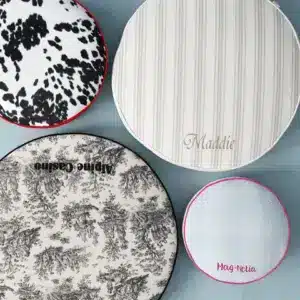
Aesthetic freedom: Custom control means you don’t have to compromise on style to get function. You can have the durability of canvas in a soft blush pink, or the breathability of linen in a rich charcoal grey. You can choose a pattern that acts as a statement piece or a solid that acts as a neutral backdrop.
Consistency: Custom materials also ensure consistency in quality. Mass-produced batches can vary wildly. A custom piece is cut from high-quality yardage. This ensures that the weave is consistent, the color is even, and the hand-feel is luxurious. It creates a product that feels substantial and worthy of the space it occupies in your home.
Common Questions About Dog Crate Cover Fabrics
What Is the Best Fabric for a Dog Crate Cover?
There is no single “best” fabric, but for most homes, a medium-to-heavyweight cotton canvas or cotton twill is the superior choice. These fabrics offer the ideal trifecta: they are durable enough to withstand daily use, breathable enough to ensure safety and comfort, and structured enough to look polished and neat. They wash well and have a natural, matte finish that blends seamlessly with most interior décor styles.
Are Natural or Synthetic Fabrics Better for Crate Covers?
Natural fibers (like cotton and linen) are generally better for crate covers than 100% synthetics. Natural fibers breathe better, preventing the crate from becoming hot and stuffy. They also tend to absorb odors less than synthetics and have a higher-quality look and feel. While some synthetic blends can offer increased durability, a cover that relies heavily on natural fibers will provide a healthier, more comfortable environment for your dog and a more sophisticated look for your home.
How Do I Choose a Fabric That Works for Both My Dog and My Home?
Start by assessing your dog’s needs. If they run hot, prioritize breathability (lighter canvas or linen blends). If they are anxious, prioritize light-blocking and noise-dampening (heavy canvas or twill). Then, look at your room. Identify the dominant textures and colors. Choose a fabric that meets your dog’s functional needs but comes in a color or texture that complements your existing furniture. Remember, a crate cover is a large visual element; treating it like upholstery rather than a pet accessory ensures it works for everyone in the house.
Give Your Pet the Comfort They Deserve
Crafted by hand, built to last, and designed to match your home. Create the perfect bed for your best friend.
Customize Their Bed
0 Comment