



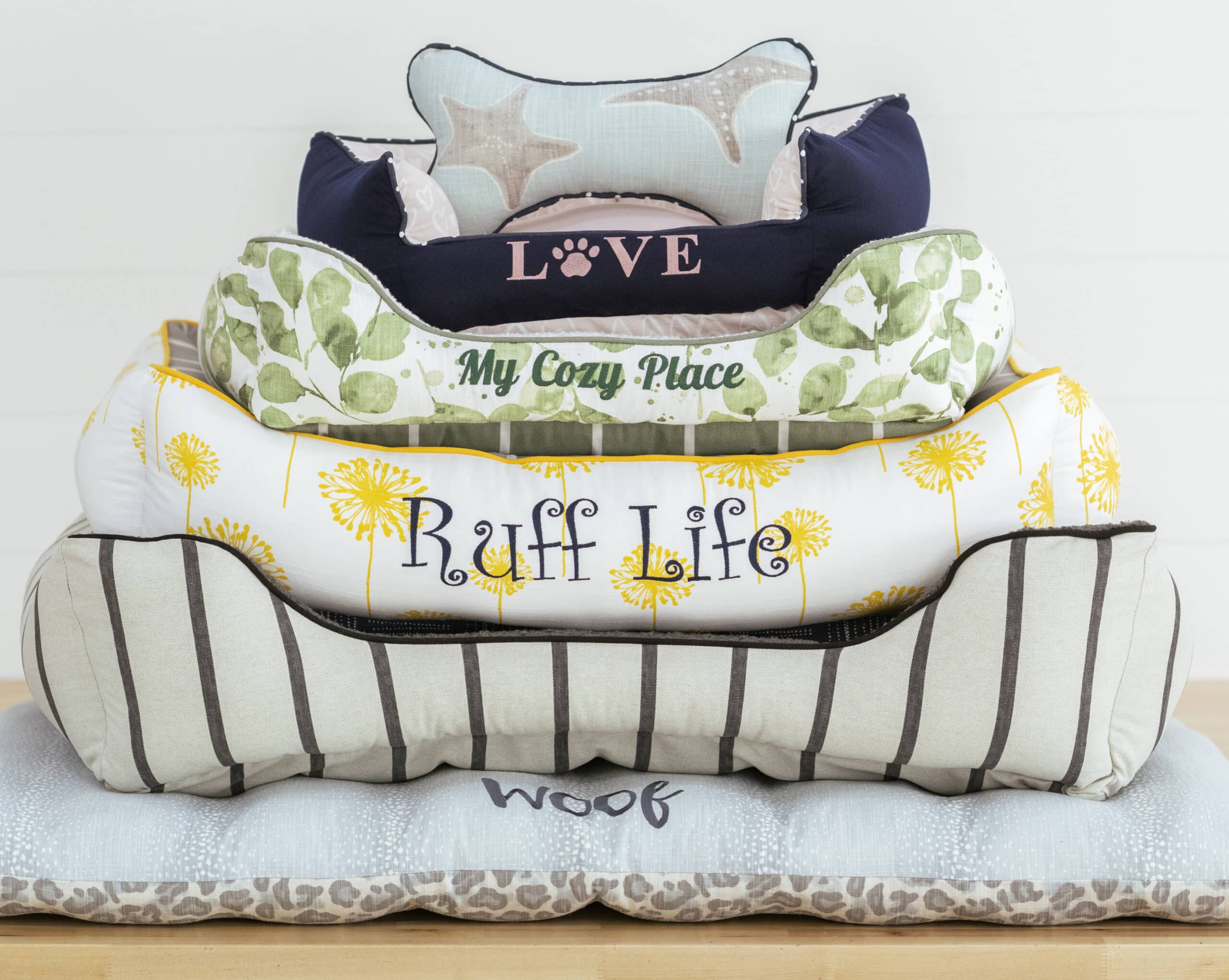


Choosing a new bed for your pet is about more than just finding a style or fabric you love; it is about creating a space that perfectly fits their body and their habits. The right size supports their posture, cushions their joints, and helps them feel secure and relaxed. A bed that is too small can prevent them from stretching out comfortably, while one that is too large can leave them feeling exposed and unsettled. The ideal pet bed size is a thoughtful balance of space and security.
At J’adore, we view sizing as a fundamental element of comfort. Every custom dog bed size is tailored to how your companion truly rests—whether they curl into a tight ball, sprawl across the entire cushion, or tuck themselves neatly into a corner. This dog bed size guide is designed to help you measure, compare, and choose the perfect dimensions for your pet’s unique shape, weight, and sleep style, ensuring the final piece is as functional as it is beautiful.
Why Pet Bed Size Matters More Than You Think
The dimensions of your pet’s bed have a direct impact on their physical health and emotional well-being. A correctly sized bed is an investment in their comfort, providing a sanctuary that supports them day after day.
The Right Fit = Better Sleep and Support
A well-fitting bed does more than just look right; it provides essential support for your pet’s body. When a bed is the correct size, it cradles their joints and helps maintain proper spinal alignment, which is especially important for senior pets, large breeds, or those with mobility issues. The result is deeper, more restorative sleep. For smaller pets, the right fit offers a sense of gentle enclosure, signaling to their nervous system that they are in a safe space, which helps them relax completely.
How Oversized or Undersized Beds Affect Your Pet
The wrong size can create discomfort and anxiety. A too-small bed curls them too tight, forcing them into an unnatural position that can strain their muscles and joints over time. They are unable to stretch out fully to regulate their body temperature or simply find a new comfortable position. On the other hand, a bed that is too large can feel too open and drafty. Many dogs and cats instinctively seek out enclosed, den-like spaces, and an oversized bed can make them lose that sense of security they naturally crave.
Custom Sizing for Personalized Comfort
Every pet is built differently, even those of the same breed. One golden retriever may be long and lean, while another is stockier. A mixed-breed dog may have a unique body shape that doesn’t fit standard sizing. This is where a custom dog bed size makes all the difference. Our made-to-order beds ensure that every nap feels perfectly tailored to their individual needs. When you design your own bed, you can provide exact measurements for a truly bespoke fit.
How to Measure Your Pet for the Perfect Fit
Taking a few simple measurements is the key to finding the ideal pet bed size. This approachable, expert-led process ensures you can order with confidence, knowing the final piece will be a perfect match for your companion.
Step 1 — Measure from Nose to Tail (Sleeping Position Matters)
Observing how your pet naturally sleeps is the most important part of measuring a dog for bed. Do they tend to curl up, stretch out, or sleep on their side?
- For Stretchers and Side Sleepers: Have your pet lie down in their typical stretched-out position. Using a soft measuring tape, measure them from the tip of their nose to the base of their tail. This measurement will give you the minimum length needed for the bed.
- For Curlers: If your pet almost always sleeps curled in a ball, you can measure their diameter in that position. However, it is always a good idea to also measure them while stretched out to ensure they have the option to change positions comfortably.
Step 2 — Add a Few Inches for Space and Shape
Once you have your pet’s measurement, you will want to add some extra inches to provide them with ample room to move and readjust. Our pet bed measurement chart recommendations vary slightly based on the bed style and your pet’s size:
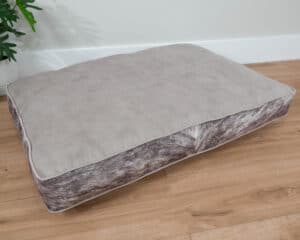
- For Cushion-Style Beds: Add 8-12 inches to your pet’s nose-to-tail measurement. This gives them plenty of space to sprawl.
- For Bolstered Beds (Lounge or Cuddle Styles): Add 5-8 inches. The interior sleeping area will be slightly smaller due to the bolsters, but this addition ensures they have enough room within the enclosed space.
- For Smaller Pets: An addition of 4-6 inches is often sufficient.
Step 3 — Consider Height and Weight for Proper Support
The final consideration is your pet’s weight. Heavier dogs require more substantial support to prevent the bed’s insert from compressing under their weight. For large or senior dogs, choosing a high-density foam insert is often the best choice for providing orthopedic support. When considering the best bed for large dogs, the combination of generous dimensions and a supportive fill is crucial.
Understanding Standard vs. Custom Pet Bed Sizing at J’adore
We offer a range of standard sizes designed to fit most common breeds, but we also recognize that many pets require a more tailored solution. Our goal is to provide a perfect fit for every animal.
Standard Sizing for Common Breeds
Our standard dog bed size guide is a helpful starting point. These sizes are thoughtfully designed to accommodate the average dimensions of many popular breeds, ensuring a comfortable fit with ample room to rest.
- Small: Ideal for breeds like Chihuahuas, Yorkies, and Pomeranians.
- Medium: Suited for Beagles, French Bulldogs, and Cocker Spaniels.
- Large: A great fit for Golden Retrievers, Labradors, and Boxers.
- Extra-Large: Designed for Great Danes, Mastiffs, and other giant breeds.
When Custom Sizing Makes Sense
There are several scenarios where custom sizing is the ideal solution:
- Mixed-Breed Dogs: A mixed-breed dog may have a unique combination of length and weight that falls between standard sizes.
- Uniquely Shaped Pets: Breeds with long bodies, like Dachshunds or Basset Hounds, often benefit from a custom rectangular bed.
- Multi-Pet Households: If two pets love to cuddle together, a single custom-sized bed can create a shared space for them.
- Specific Spaces: A custom bed can be designed to fit perfectly into an unused corner, an alcove, or under a window.
Tailored Dimensions for Cats, Too
Cats also benefit from properly sized beds. While many cats are small, they still need enough room to feel secure without being cramped. Our small cat bed dimensions are perfect for most felines, but larger breeds like Maine Coons or Ragdolls may appreciate a medium-sized bed. Custom sizing can also create the perfect cushion for their favorite windowsill perch, honoring their instinct for a cozy, elevated spot.
Pet Bed Size Chart Reference
This reference is designed to help you visualize the right size for your pet. While measurements are always the most accurate method, this pet bed size by breed and weight chart can serve as a helpful guide.
Dog Bed Size Chart by Breed and Weight
This chart offers general recommendations. Always measure your individual dog for the best results.
- Small (approx. 24″ x 18″):
- Weight: Up to 25 lbs
- Breeds: Chihuahua, Maltese, Pomeranian, Toy Poodle, Yorkshire Terrier
- Medium (approx. 30″ x 20″):
- Weight: 26-40 lbs
- Breeds: Beagle, French Bulldog, Cocker Spaniel, Shetland Sheepdog
- Large (approx. 36″ x 28″):
- Weight: 41-70 lbs
- Breeds: Australian Shepherd, Basset Hound, Boxer, Golden Retriever, Labrador Retriever
- Extra-Large (approx. 42″ x 32″):
- Weight: 71-110+ lbs
- Breeds: Bernese Mountain Dog, German Shepherd, Great Dane, Mastiff
The dog weight vs bed size correlation is important, but a long-bodied, lighter dog might need a larger bed than a compact, heavier dog.
Cat Bed Size Chart by Weight and Sleep Style
Our cat bed sizing chart is simpler, as most domestic cats fall within a similar size range.
- Small (approx. 20″ diameter or 24″ x 18″):
- Weight: Up to 12 lbs
- Details: Ideal for most domestic shorthair and longhair cats, especially those who prefer to curl up. This size provides the perfect sense of security for indoor cats.
- Medium (approx. 30″ x 20″):
- Weight: 13+ lbs
- Details: Recommended for larger breeds like Maine Coons, Ragdolls, and Siberian cats, or for pairs of cats who enjoy sleeping together.
Choosing the Right Insert Type for Size and Weight
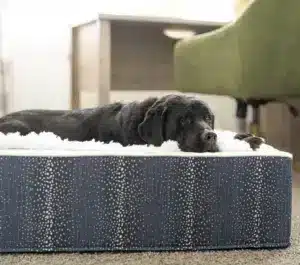
For any given size, the insert material is key. A plush fiberfill insert is wonderful for smaller pets who love to nest. For large dog bed measurements, however, we strongly recommend a high-density foam insert. It provides the orthopedic support needed to cushion heavier bodies and will hold its shape for years without flattening.
Tips for Large Dogs, Small Breeds, and Cats
Every type of pet has unique needs when it comes to the perfect resting spot. Here is some lifestyle guidance to help you refine your choice.
For Large Dogs — Space and Support Are Key
When choosing the best bed for large dogs, prioritize generous space and orthopedic support. Look for large dog bed measurements that allow them to stretch out completely without their limbs hanging off the edge. A firm, supportive foam insert is essential for protecting their joints. Consider a lounge-style bed with a low bolster on one side, which gives them a place to rest their head while still allowing for an easy entrance and exit.
For Small Dogs — Security and Softness Matter Most
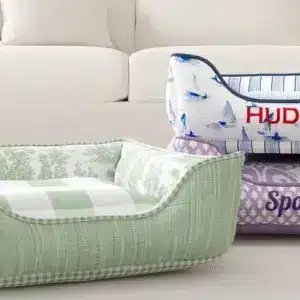
Small dogs often seek out cozy, protected spaces that make them feel safe. A cuddle bed with high, soft bolsters is an excellent choice, as it provides a comforting, den-like environment. Gentle, plush fabrics like velvet or chenille can enhance this sense of security.
For Cats — Think Comfort Meets Privacy
Cats are masters of finding comfortable, private spots. A bed with a curved, enclosing shape often appeals to their nesting habits. A throne-style bed can give them the elevated perch they love, while a tailored crate cover can turn a simple crate into their own private sanctuary. To learn more about creating the ideal feline retreat, you can explore our resource on luxury for cats.
Use Our Size Guide When You Design Your Own Bed
Every pet is different, and their bed should be, too. A well-fitting bed is a simple, powerful way to show your care. It is a space designed for their body, their habits, and their ultimate comfort.
With the right measurements in hand, you can confidently design your own bed. The design steps are simple, and choosing the best pet bed fillings will ensure the comfort lasts for years.
Frequently Asked Questions About Pet Bed Sizes
How do I know what size bed my dog needs?
The best way is to measure your dog while they are in their favorite sleeping position. Measure from their nose to the base of their tail, then add 8-12 inches for room to stretch. Compare this final measurement to the dimensions listed for each bed size.
Should I size up for a growing puppy?
Yes, it is a good idea to choose a bed that will fit your puppy’s expected adult size. This prevents you from having to buy a new bed in just a few months. In the meantime, you can fill the extra space with soft blankets to help them feel more secure.
Can I order a custom-sized bed for my pet?
Yes. We specialize in creating custom-sized beds to fit your pet’s unique dimensions or a specific space in your home. Simply select the “custom size” option during the design process and provide us with the length and width you need.
What if my pet sleeps in different positions?
If your pet is a versatile sleeper—sometimes curling and sometimes stretching—it is always best to size up. Choose a bed that accommodates their largest sleeping position (usually stretched out). This ensures they will always be comfortable, no matter how they choose to rest.
Give Your Pet the Comfort They Deserve
Crafted by hand, built to last, and designed to match your home. Create the perfect bed for your best friend.
Customize Their Bed
0 Comment