






A crate doesn’t exist in isolation. It sits on a floor where air moves differently, in a room where light shifts throughout the day, surrounded by the sounds of daily life. While the crate itself may be the right size and properly placed, the environment around it often goes unnoticed.
For a dog resting in one spot, those details matter. Passing shadows, background noise, and subtle drafts all add up. What feels minor to us can make a crate feel unsettled, exposed, or difficult to relax in. That’s usually when people start looking for ways to soften the space.
Managing noise, light, and airflow isn’t about shutting the world out. It’s about dialing things back just enough to create consistency. When those elements are handled with intention, a crate stops feeling like a wire box in the middle of a room and starts functioning as a place where a dog can actually rest.
The Environmental Factors That Affect How a Crate Feels
The comfort of a crate isn’t just about the softness of the pillow. It is defined by the atmosphere inside the crate itself. Imagine trying to sleep in a room where the lights flicker every time a car drives by, or where a cold breeze hits your ankles constantly. You might eventually fall asleep, but the quality of that rest would be poor.
Dogs are incredibly sensitive to their environment. Their hearing is far sharper than ours, and their ability to detect movement in low light is superior. When we place a crate in a high-traffic area like a kitchen or living room, we are placing them in a sensory hub. The factors that affect how a crate feels—sound, light, and temperature—are constantly shifting throughout the day.
A crate that feels cozy at 2:00 PM when the house is quiet and sunlit might feel exposed and drafty at 8:00 PM when the family is active and the heating vents are blowing. Recognizing these shifts is the first step in curating a better dog crate environment.
Everyday Noise, Shifting Light, and Air Movement
The modern home is a busy ecosystem, and three main factors contribute to the sensory load your dog experiences.
Everyday Noise: Our homes are filled with hums, clicks, and thuds. The refrigerator cycles on, the dishwasher runs, footsteps echo on hardwood floors, and televisions murmur in the background. In an open wire crate, there is nothing to absorb these sounds. High-frequency noises, like the clinking of silverware or the notification ping of a phone, can be particularly sharp to canine ears. While we tune them out, a dog in a crate is often monitoring them, trying to determine if any of these sounds require a reaction.
Shifting Light: Light is a powerful biological signal. It tells the brain when to be alert and when to rest. In many homes, lighting is inconsistent. Sunlight streams in through windows, shifting shadows across the floor. Artificial lights are turned on and off. Headlights sweep across the wall at night. For a dog in an uncovered crate, this visual input is relentless. The flicker of a TV screen alone can create a strobe-like effect inside a wire crate, making it difficult for the brain to switch into sleep mode.
Air Movement: Drafts are the most overlooked factor in crate setup for dogs. Because heat rises, the floor—where the crate sits—is often the coldest place in the room. Drafts from under doors, near windows, or from air conditioning vents can cut right through a wire crate. A dog cannot pull up a blanket if they get cold. If the crate is positioned in a drafty corridor, the dog is subjected to a constant, chilling airflow that makes relaxation physically difficult.
How Crate Covers Help Manage These Disruptions
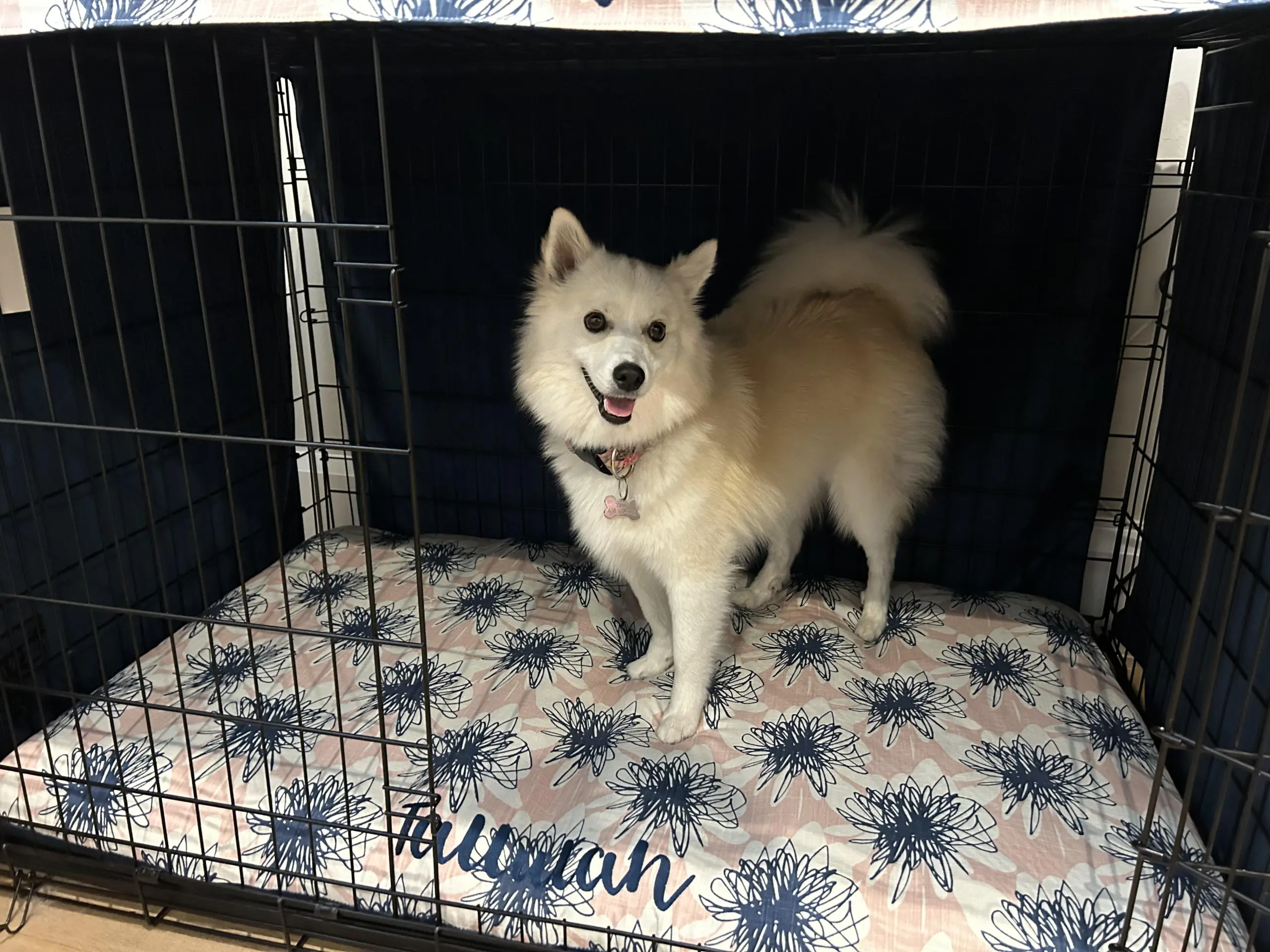
This is where a crate cover becomes a functional tool rather than just a decorative accessory. Its primary job is to act as a buffer. By adding a layer between the dog and the room, you are essentially dampening the intensity of the environment.
A cover gives you control. It allows you to create a micro-environment inside the crate that is distinct from the rest of the room. It softens the hard edges of the sensory world. When used correctly, a cover signals to the dog that the crate is a separate, stable zone where the rules of the busy house don’t apply. It is a place of pause.
However, it is important to understand that a cover is a filter, not a fortress. It modifies the environment; it doesn’t seal it off entirely.
What a Cover Can Improve and What It Can’t
It is helpful to have realistic expectations about dog crate cover benefits.
What It Improves:
- Visual Stability: A cover is excellent at blocking visual triggers. It stops the dog from tracking movement across the room, which significantly lowers their arousal levels.
- Draft Reduction: A heavyweight fabric acts as a windbreak. It stops the direct flow of air from a vent or a drafty window from hitting the dog, keeping the interior temperature more consistent.
- Sound Softening: While no fabric can block sound entirely, a dense material like canvas helps to absorb high-pitched frequencies and reduce the “echo” effect that can happen inside a metal cage. It takes the sharpness out of ambient noise.
- Light Management: A cover significantly reduces the glare of artificial lights and blocks direct sunlight, creating a dimmer, den-like atmosphere conducive to sleep.
What It Can’t Do:
- Soundproofing: A crate cover for noise and light will not silence a thunderstorm or a loud party. It cannot block low-frequency vibrations like thunder or bass from music.
- Climate Control: A cover cannot heat or cool the crate. While a dog crate cover for drafts helps retain some body heat, it is not an insulator like a house wall. Conversely, it cannot cool a hot room; in fact, improper use in heat can be dangerous.
- Total Blackout: Unless you are using specialized, potentially unsafe materials, some light will filter through breathable fabrics. This is actually a good thing, as total darkness can be disorienting.
Where Crate Covers Often Fall Short
Despite the clear benefits, many crate cover setups fail to provide the comfort owners are hoping for. The issue often lies in the execution. We tend to think in binaries: open or closed, light or dark. This leads to common mistakes that can actually make the crate environment less comfortable for the dog.
The most frequent error is prioritizing blockage over breathability. In an attempt to make the crate “cozy” or “quiet,” owners might drape heavy comforters or thick, synthetic blankets over the crate. While this might block light and drafts, it introduces new problems related to air quality and temperature regulation.
Too Much Coverage, Not Enough Intention
When we over-cover a crate, we risk creating a stagnant environment.
The Stuffy Box Effect: A crate needs to breathe. Dogs release heat and moisture when they pant. If a crate is covered with a heavy, non-breathable polyester blanket or a fitted cover made of coated nylon, that moisture has nowhere to go. The air inside becomes humid and stale. This is a common dog crate cover problem that leads to discomfort and can even cause skin issues or respiratory irritation over time.
The Heat Trap: An overcovered dog crate can become dangerously hot, even in a room that feels cool to a human. Synthetic fabrics trap body heat. If the crate is placed in a sunny spot, a dark, heavy cover can act like a solar oven. A dog that is too hot will be restless, panting and moving constantly to find a cool spot that doesn’t exist.
Lack of Airflow: Crate cover airflow issues are serious. Air needs to circulate through the crate, not just around it. A cover that fits too tightly against the bars without breathable fabric prevents fresh air from entering the lower sections of the crate where the dog is lying. This lack of circulation makes the space feel oppressive rather than safe.
Designing for Balance Instead of Blocking Everything
The secret to effective environmental control is balance. We are not trying to eliminate the environment; we are trying to regulate it. The ideal crate setup functions like a well-designed house: it has walls for protection, but windows for air and light.
This approach requires selecting materials and designs that multitask. We want to reduce light without eliminating air. We want to block drafts without trapping heat. We want to soften noise without creating a sensory deprivation chamber. This nuance is what separates a thoughtful crate setup from a hasty one.
Allowing Airflow While Reducing Sensory Input
Achieving this balance comes down to the relationship between the fabric and the crate frame.
Breathable Materials are Non-Negotiable: To have a safe dog crate cover design, the fabric itself must breathe. Natural fibers like heavy cotton canvas are superior here. The weave of the canvas is tight enough to block drafts and dim light, but permeable enough to allow air molecules to pass through. This passive ventilation ensures that the air inside the crate remains fresh.
The “Air Gap”: A proper cover shouldn’t wrap the crate like plastic wrap. There should be a natural air gap between the fabric and the crate interior. This is usually achieved through the structure of the crate itself. The fabric hangs straight down, creating a buffer zone. This allows air to be pulled in from the bottom (under the cover) and circulate upwards, keeping the temperature regulated.
Selective Permeability: We want to be selective about what we block. We want to block the cold draft from the floor, but we might want to keep the front panel open for ventilation. A breathable dog crate cover allows you to make these choices, ensuring that you are reducing the sensory input that causes stress (like visual movement) while maintaining the environmental factors that ensure health (like fresh air).
Why Custom Solutions Handle Environmental Control Better
When you buy a generic, one-size-fits-all crate cover, you are often buying a compromise. These covers are typically made of thin, synthetic materials designed for mass production, not environmental management. They are often too loose (allowing drafts in) or too tight (restricting airflow). They rarely offer the features needed to fine-tune the crate environment.
Custom solutions, on the other hand, are built with the specific goal of environmental control in mind. They acknowledge that every home and every dog is different. A custom dog crate cover allows you to address the specific challenges of your space—whether that’s a drafty hallway or a bright sunroom—with intentional design choices.
Fit, Fabric Choice, and Adjustable Coverage Working Together
A made-to-order crate cover brings three critical elements together to create the ideal environment.
Precision Fit for Draft Control: A personalized dog crate cover is tailored to the exact dimensions of your crate. This means the panels hang at the correct length, just brushing the floor or the crate tray. This precision eliminates the large gaps found in generic covers where drafts can sneak in. The structured fit creates a consistent barrier against cold air currents moving across the floor.
Fabric Weight for Acoustics: With custom options, you aren’t stuck with flimsy polyester. You can choose substantial, upholstery-grade fabrics. The weight of these fabrics creates a better acoustic buffer, dampening the sharp sounds of a busy household more effectively than thin materials. It also hangs better, creating a more solid visual barrier that doesn’t flutter with every air conditioner cycle, reducing visual noise as well.
Adjustable Coverage for Airflow Management: The hallmark of a custom solution is the ability to adjust. Independent roll-up panels allow you to act as the thermostat for your dog’s crate. On a hot night, you can roll up the sides for maximum cross-breeze while keeping the top covered for security. On a cold winter evening, you can lower all panels to block drafts and retain warmth. This adaptability ensures that the crate environment is always optimized for the current conditions, keeping your dog comfortable year-round.
Common Questions About Crate Covers and Environmental Control
Do Crate Covers Actually Reduce Noise for Dogs?
They do, but it’s important to understand how. A fabric crate cover won’t block out a thunderstorm or a barking dog next door. However, a heavy, high-quality fabric cover acts as a sound dampener. It absorbs high-frequency noises—like the clatter of dishes or the hum of electronics—that can be irritating to dogs. It also reduces the echo inside the metal crate itself. Think of it like adding a rug to an empty room; it doesn’t stop sound, but it makes the space feel quieter and softer. This reduction in ambient noise helps lower a dog’s overall stress level.
How Much Light Should a Dog Crate Have?
Ideally, a crate should be dim, not pitch black. Total darkness can be disorienting and may cause anxiety if a dog wakes up and can’t orient themselves. A crate cover should filter light to create a twilight effect—similar to a shaded den. This signals to the dog’s brain that it is time to rest. Breathable fabrics like canvas are excellent for this, as they block harsh glare and direct sunlight while allowing a small, comforting amount of ambient light to filter through the weave.
Can a Crate Cover Block Drafts Without Trapping Heat?
Yes, if the right material is used. This is the primary advantage of natural, breathable fabrics like cotton canvas. The tight weave of the canvas is enough to stop a direct draft of moving air—like wind from a window or air from a vent—from hitting the dog. However, because the fabric is permeable, it allows heat and moisture to slowly escape rather than building up inside. This creates a comfortable micro-climate where the dog is protected from the chill but isn’t subjected to the “greenhouse effect” of a synthetic cover.
Give Your Pet the Comfort They Deserve
Crafted by hand, built to last, and designed to match your home. Create the perfect bed for your best friend.
Customize Their Bed
0 Comment