


When we think about dog crates, we often focus on the occupant first. Is it a sprawling Great Dane who needs room to stretch, or a tiny Chihuahua who prefers a cozy, nest-like nook? While the dog’s size dictates the crate size, the crate size dictates something else entirely: the physics of the cover.
Designing a crate cover isn’t just about cutting a piece of fabric to fit a box. It’s about understanding scale. A cover for a massive 48-inch crate faces completely different structural challenges than a cover for a compact 24-inch one. Gravity works differently on a large span of fabric than it does on a small one. Airflow dynamics change. The way the fabric hangs, folds, and holds its shape varies dramatically depending on the dimensions.
Whether you have a gentle giant or a petite companion, understanding these differences is key to choosing a cover that looks tailored and functions safely. It’s not just about “big” versus “small”—it’s about respecting the unique architectural needs of each size to create a space that feels intentional, comfortable, and built to last.
Why Size Changes Everything in Crate Cover Design
It’s easy to assume that a large crate cover is just a zoomed-in version of a small one. You simply add more inches, right? Unfortunately, that approach leads to design failures. Scaling up isn’t linear. As the surface area increases, the demands on the material and the construction multiply.
Size changes how the cover interacts with the room, how it handles wear and tear, and most importantly, how it maintains its structure. A design that looks crisp and neat on a small crate can look sloppy and saggy on a large one if the scale hasn’t been accounted for. Conversely, design elements that work well on a large crate can overwhelm a small one, making it look cluttered and heavy.
A Small Crate and a Large Crate Don’t Behave the Same Way
Think of a small crate like a side table and a large crate like a sofa. You wouldn’t use the same construction techniques for a tablecloth as you would for upholstery, yet both need to look polished.
A small dog crate cover covers a compact frame. The distances between the wire supports are short. The fabric doesn’t have far to travel from corner to corner. This means it inherently holds its shape better.
A large dog crate cover, however, spans a wide open space. The top panel might be three or four feet long. Without the right design, that expanse of fabric is vulnerable. It responds to gravity by dipping in the middle. It responds to drafts by rippling. A dog crate cover by size isn’t just a category on a shopping page; it’s a fundamental distinction in how the product needs to be engineered to stay looking good.
Weight, Span, and Surface Area Matter More Than Most People Expect
The physics of fabric are surprisingly unforgiving. As you increase the span (the distance the fabric hangs without support), you exponentially increase the potential for sagging.
On a large crate, the weight of the fabric itself becomes a factor. A heavy duty dog crate cover made of substantial canvas weighs significantly more than a small one. If that weight isn’t supported by precise tailoring and proper tension, the cover will look heavy and tired.
Surface area also impacts stability. A large cover has more surface area to catch air currents, bumps, and nudges. It needs to be anchored more securely to prevent shifting. Dog crate cover structure is about managing this weight and area so the cover remains a static, calm element in the room rather than a shifting, shapeless mass.
Structural Differences Between Large and Small Crate Covers
To combat the forces of gravity and scale, the actual structure of the cover needs to adapt. We can’t use the same pattern logic for every size. The seams, the panels, and the reinforcements must be adjusted to suit the specific dimensions of the crate.
Why Larger Crates Need More Support and Shape
A large crate cover design is a battle against the droop. To win, you need structure. This often means using heavier seams or even reinforced piping to act as a “skeleton” for the fabric.
On an oversized crate cover, the top panel is the critical zone. If it’s just a single layer of fabric, it will inevitably hammock in the center. A sturdy dog crate cover for a large breed often benefits from a tighter fit or a stiffer fabric choice that resists this downward pull. The sides, too, need to hang straighter. On a tall crate, a long side panel acts like a heavy curtain. If the grain of the fabric isn’t perfectly straight, that long panel will twist and warp over time.
How Smaller Crates Allow for Softer Structure
In contrast, a small crate cover design can be more forgiving. Because the panels are short and light, they don’t require as much internal support to hang straight.
A lightweight dog crate cover works beautifully on a small frame. You can get away with softer, more draped looks that would look messy on a larger scale. A compact crate cover can feature delicate details or softer corners without losing its form. The structural demands are lower, giving you slightly more freedom to play with aesthetic choices that might not be practical for a giant crate.
Fabric Weight Considerations by Crate Size
Choosing the right fabric is always a balance of durability, breathability, and aesthetics. But when you factor in size, the “weight” of the fabric (measured in ounces per square yard) becomes a crucial technical specification.
When Lightweight Fabrics Work—and When They Don’t
On a small crate, a lighter weight canvas or a medium-weight twill can look fantastic. It’s easy to wash, easy to handle, and creates a neat, tidy silhouette. A lightweight dog crate cover on a small frame allows for plenty of airflow and doesn’t feel overwhelming in a smaller room.
However, put that same lightweight fabric on a 42-inch crate, and you have a problem. It will lack the body to hold a straight line across the top. It will flutter every time the dog moves or the AC turns on. A breathable dog crate cover is essential, but for large breeds, that breathability has to come from the weave of the fabric, not its thinness. Using a flimsy fabric on a large crate is the quickest way to make a custom piece look like a cheap sheet.
Why Heavy Fabrics Behave Differently on Large Spans
For a large crate, you generally want a fabric with more “guts.” A heavy duty dog crate cover made from a 10oz or 12oz duck canvas has the stiffness required to bridge the gap across the top of the crate without sagging.
The best fabric for large crate cover applications is one that is structurally stable. It resists stretching. When you roll up the door panel on a large crate, a heavy fabric holds a crisp, tight roll. A lighter fabric would collapse and look messy. Durable crate cover fabric on a large scale acts almost like a wall—it provides a solid visual barrier that makes the crate feel like a permanent fixture.
Fit Challenges That Show Up at Different Sizes
Fit is the hallmark of quality. But achieving that perfect, tailored look requires solving different puzzles depending on the size of the crate.
Sagging, Pulling, and Distortion on Larger Crates
The enemy of the large crate cover is distortion. Over time, gravity pulls on the fibers. If the cover isn’t patterned perfectly, you will see large crate cover fit issues develop.
The most common issue is dog crate cover sagging in the center of the top panel. This happens when the fabric relaxes. Another issue is “pulling” at the corners. Because the fabric is heavy, it puts more stress on the corner seams. If those seams aren’t reinforced, they can start to separate or pull the cover out of alignment. Crate cover stretching is also more pronounced on large items simply because there is more fabric available to stretch. A custom design accounts for this by factoring in the “growth” of the fabric and sizing the panels to remain taut.
Overhang and Excess Fabric on Smaller Crates
On the other end of the spectrum, small crate cover fit issues often revolve on excess. On a small frame, a half-inch error is glaringly obvious. If a cover is slightly too big, it swallows the crate.
A dog crate cover too big for a small crate looks like a hand-me-down coat. The overhang drags on the floor, collecting dust and making the crate look shapeless. Crate cover proportion issues are magnified on small items. The hem needs to be precisely calculated to hover just above the floor or tray, keeping the look sharp and intentional.
Why “One Size Fits All” Fails at Both Ends of the Spectrum
Mass-market manufacturers love the idea of “universal” sizing, but in reality, there is no such thing. A cover designed to fit an “average” crate will likely fit nothing well. It fails the Great Dane and the Frenchie equally, but for different reasons.
Where Generic Covers Miss Structural and Visual Balance
A one size fits all crate cover is usually made of thin, cheap polyester to keep costs down. On a large crate, this material looks like a tent. It billows and sags. On a small crate, the generic sizing is often baggy and loose.
Store bought crate cover problems often stem from this lack of specific engineering. They miss the structural balance needed for big spans and the visual balance needed for small frames. They rely on elastic toggles or Velcro to “adjust” the fit, which creates bunches of fabric and a cluttered, temporary look. Crate cover sizing issues like this undermine the goal of integrating the crate into your home decor.
How Poor Fit Affects Function, Not Just Appearance
Fit isn’t just about vanity; it’s about safety and function. A sagging top on a large crate can reduce the headspace for the dog. Excess fabric pooling on the floor of a small crate can block the slide-out tray, making cleaning difficult.
More critically, dog crate cover airflow is compromised by poor fit. A baggy cover can accidentally block ventilation channels. Crate cover safety concerns arise when loose fabric invites chewing or pulling. A tailored cover stays out of the dog’s way and keeps the ventilation consistent. Crate cover performance depends on the material staying exactly where it was designed to be.
Designing for Proportion, Not Just Measurement
Beyond the tape measure, there is the art of proportion. This is where design savvy comes in. It’s about looking at the crate as a volume in space and deciding how to dress it so it looks balanced.
Why Scale and Line Matter as Much as Inches
A tailored dog crate cover considers the lines of the crate. On a tall, large crate, vertical lines (like piping or panel seams) can emphasize height, making the crate feel imposing. A horizontal element might help ground it.
On a small crate, chunky details can look cartoonish. Dog crate cover proportions need to scale down. A massive zipper or a wide band of trim that looks great on a 48-inch crate will overwhelm a 24-inch one. Custom fit crate cover design is about adjusting these details—the width of the hem, the size of the ties, the placement of the label—so they feel appropriate for the specific size of the piece.
How Proportion Changes the Way a Crate Feels in a Room
A large crate is a dominant object. In a living room, it draws the eye. The goal of dog crate cover home décor for large breeds is often camouflage or integration. You want clean lines and neutral colors that help the crate recede visually.
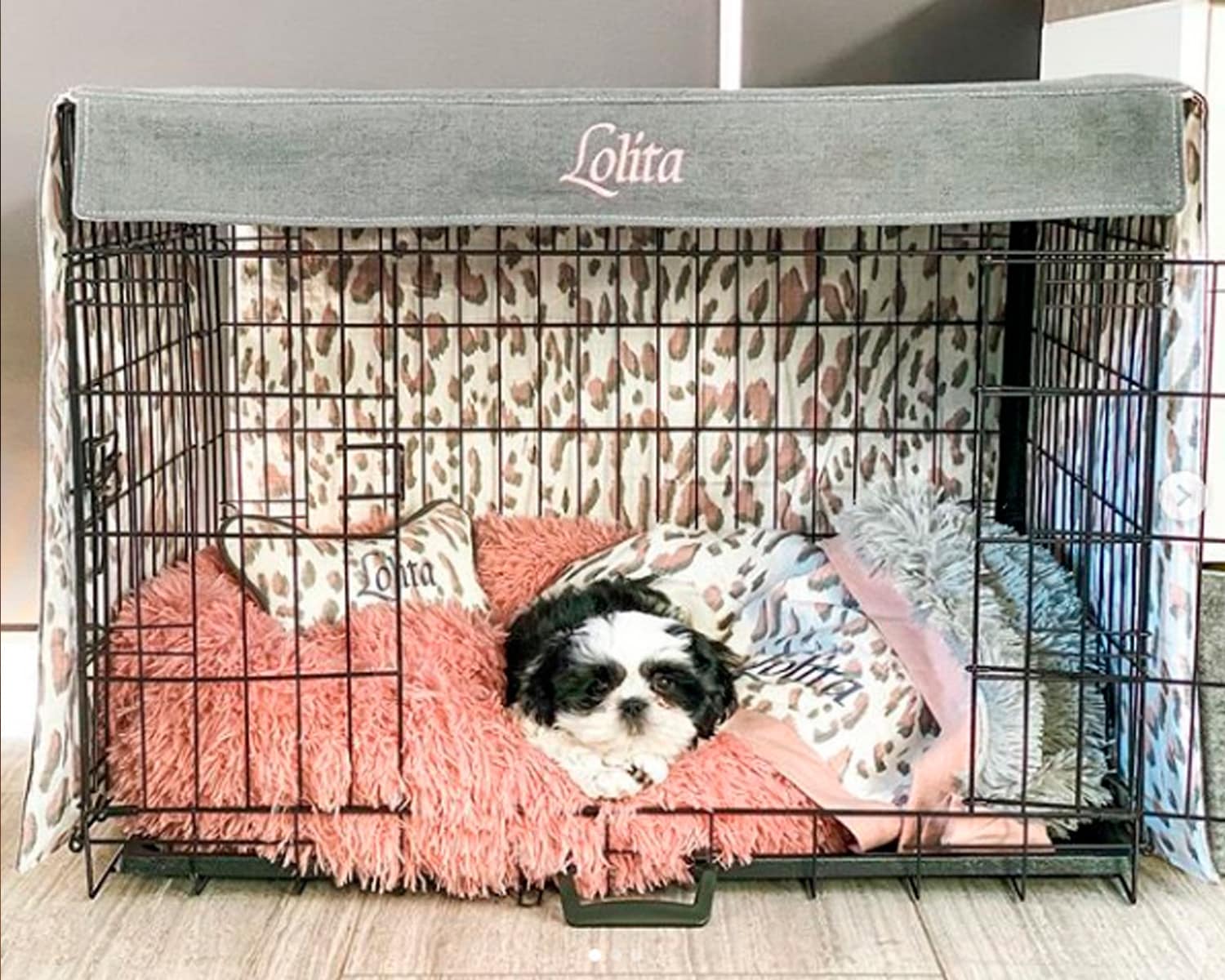
For a small crate, you have more freedom. A crate cover living room setup for a small breed can be a design accent. It can sit next to a chair like a curated accessory. Pet friendly home design recognizes these different roles: the large crate as architecture, the small crate as furniture.
Airflow and Ventilation Across Different Crate Sizes
We cannot talk about design without talking about the dog’s health. Ventilation is non-negotiable, but the physics of airflow change with the volume of the crate.
Why Larger Crates Need More Thoughtful Air Movement
A large crate contains a large volume of air, but it also contains a large dog generating significant body heat. Large dog crate ventilation is critical because big dogs can overheat quickly, and stagnant air pockets can form in the corners of a massive crate.
A breathable crate cover for a large breed needs to facilitate cross-ventilation. This often means designing panels that can be rolled up completely, or choosing a weave that is porous enough to let heat escape even when the cover is down. Dog crate cover airflow isn’t just about letting air in; it’s about letting hot air out.
How Smaller Crates Can Overheat Faster Than Expected
A small crate has less air volume. This means a small dog can warm up that enclosed space very efficiently. Small dog crate airflow is tricky because the smaller surface area leaves less room for vents or openings.
If you cover a small crate in a heavy, non-breathable fabric, it can become an oven. Safe dog crate cover design for small breeds prioritizes lighter, breathable fabrics like cotton canvas that allow for heat exchange. Crate cover overheating is a silent risk that proper material selection and fit can prevent.
Why Size-Specific Design Improves Long-Term Use
When you design for the specific realities of the size, the product lasts longer. It’s that simple. A cover that isn’t fighting against gravity or struggling to contain a frame it wasn’t built for will age gracefully.
Durability, Washability, and Shape Retention by Scale
A durable dog crate cover for a large dog needs reinforced stress points because the friction and weight are higher. A washable crate cover for a small dog needs to hold its shape after laundering because even a small amount of shrinkage will ruin the fit.
Long lasting crate cover performance comes from anticipating these failures. It means pre-shrinking the fabric so the small cover doesn’t become too tight. It means double-stitching the top seams of the large cover so they don’t pop under tension.
Why Covers Designed for Size Perform Better Over Time
A custom dog crate cover that is engineered for its specific size doesn’t sag. It doesn’t rip. It doesn’t get chewed on because it fits tightly.
Size specific crate cover design respects the materials. It doesn’t ask a lightweight fabric to do a heavyweight job. A made to measure crate cover retains its value because it remains functional and beautiful year after year, unlike a generic cover that starts to degrade the moment you put it on.
How Custom Covers Solve Size-Based Design Problems
This is where the boutique approach shines. Customization isn’t just about picking a pretty color; it’s about solving the engineering problems we’ve just discussed.
Adjusting Fabric Weight, Panel Placement, and Structure
When we make a custom dog crate cover, we look at the dimensions first. If it’s a giant crate, we might suggest a heavier canvas to ensure a crisp look. We might adjust the placement of the ties to ensure they are easy to reach across a wide span.
For a tailored crate cover on a smaller frame, we ensure the hem is delicate and the panel overlaps are proportionate. Professionally made crate cover workshops have the ability to tweak these invisible details—adjusting the seam allowance, reinforcing the corners—to suit the scale.
Designing for the Crate You Actually Own
Standard crates vary wildly. A “Large” from one brand is different from a “Large” from another. Personalized dog crate cover design starts with your specific measurements.
Custom crate cover sizing eliminates the guesswork. It means the cover is designed for your crate, not a theoretical average. Crate cover made to order means we can account for the slight variations in wire gauge, tray height, and door placement that generic covers ignore.
Choosing the Right Design Approach for Your Dog and Space
Ultimately, your choice depends on the intersection of your dog’s needs and your home’s layout.
Large Dogs in Shared Spaces vs Small Dogs in Compact Rooms
A large dog crate in living room settings is a major piece of furniture. The design approach here should be “blending in.” Neutral colors, clean lines, and a perfect fit help minimize its visual footprint.
A small dog crate setup in a compact room or a bedroom might need to double as a nightstand or side table surface (with a hard top added underneath the cover). Crate cover room placement dictates function. Recognizing that a large crate dominates a room while a small one accents it helps you make better style choices.
Balancing Function, Comfort, and Visual Weight
Intentional dog crate design balances these competing needs. For a large dog, you balance the need for heavy-duty durability with the desire for a look that isn’t industrial. For a small dog, you balance the need for cozy comfort with the need for airflow.
A stylish dog crate cover achieves this harmony. It doesn’t sacrifice the dog’s comfort for the owner’s aesthetic, nor does it sacrifice the home’s style for utility. Crate cover home styling is about finding that sweet spot where the cover performs perfectly for the size of the dog and looks beautiful in the size of the room.
Common Questions About Crate Covers by Dog Size
Do Large Dogs Need Heavier Crate Covers?
Not necessarily “heavier” in terms of warmth, but often heavier in terms of fabric weight. A heavier canvas or duck cloth helps a large cover maintain its structure and resist sagging over wide spans. However, the fabric must still be breathable to prevent overheating.
Are Small Crate Covers Easier to Design?
In some ways, yes, because gravity is less of an issue. However, they are less forgiving of measurement errors. A one-inch mistake on a small cover is a huge percentage of the total size, leading to obvious fit issues. Precision is even more critical on small scales.
Why Do Large Crate Covers Sag Over Time?
Sagging is usually caused by two factors: gravity acting on a large span of fabric, and the fabric fibers relaxing or stretching over time. Using a structured, tightly woven fabric and ensuring a precise fit can minimize this. Generic covers sag because they lack the internal tension needed to hold their shape across a large frame.
Is Custom Worth It for Non-Standard Crate Sizes?
Absolutely. If you have an unusually tall crate for a Great Dane or a wide, double-door crate, a standard cover simply won’t fit. It will likely block doors or leave gaps. A custom cover ensures that the ventilation, door access, and visual look are perfect, regardless of the crate’s odd dimensions.
Give Your Pet the Comfort They Deserve
Crafted by hand, built to last, and designed to match your home. Create the perfect bed for your best friend.
Customize Their Bed
0 Comment