


Designing a custom dog crate cover is often the first time a pet owner realizes they don’t have to settle for the standard “pet store look.” For years, the options were limited to basic beige polyester or perhaps a flimsy grey flap. But a crate cover is a significant visual element in your home. It occupies real estate in your living room, bedroom, or home office. When you start to view it through the lens of interior design rather than just pet containment, the possibilities open up.
A custom cover allows you to bridge the gap between function and style. It transforms a wire box into a thoughtful addition to your space. Whether your home is modern and minimal, warm and traditional, or somewhere in between, the right design choices can make the crate feel like it was always meant to be there. Here are ten design ideas to inspire your own custom creation, focusing on timeless appeal, material quality, and the kind of thoughtful details that make a house feel like a home.
1. Neutral Crate Covers That Let the Room Lead
Sometimes the most impactful design choice is the one that whispers rather than shouts. In a room already filled with art, rugs, and interesting furniture, a dog crate doesn’t need to be the center of attention. Choosing a neutral palette for your crate cover is a sophisticated way to acknowledge its presence without letting it dominate the space.
This approach isn’t about being boring; it’s about being intentional. A neutral dog crate cover in shades of oatmeal, soft grey, charcoal, or cream acts as a visual anchor. It grounds the crate, allowing the eye to glide over it rather than getting stuck on a busy pattern or a jarring color. It respects the existing design hierarchy of the room, letting your favorite armchair or that beautiful vintage rug remain the focal point.
Why Minimal Color Palettes Create Calm, Timeless Spaces
A minimalist dog crate cover works because it mimics the behavior of high-end upholstery. Think about a linen sofa or a canvas armchair. These pieces are often neutral because they are large visual blocks. A crate is similar. By keeping the color palette minimal, you create a sense of calm.
Neutral tones are also incredibly versatile. If you decide to paint the walls next year or swap out your throw pillows for the season, a modern dog crate cover in a solid neutral will likely still fit perfectly. It offers longevity that trendier colors simply can’t match. This timeless quality makes a neutral cover a smart investment for a home that evolves over time. It creates a serene backdrop for your dog’s daily life and a quiet, cohesive element for yours.
2. Soft Patterns That Feel Lived-In, Not Busy
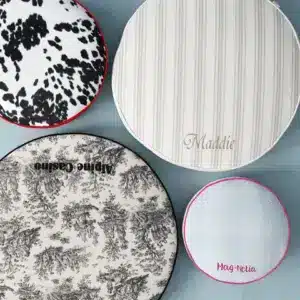
Pattern can be wonderful, but on a large, boxy object like a crate, it needs to be handled with care. The goal is to add interest and character without creating visual clutter. This is where soft, subtle patterns shine. Think of designs that read as a texture from a distance but reveal a delicate print when you get close.
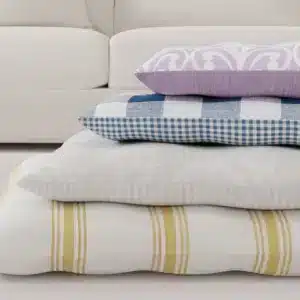
A patterned dog crate cover doesn’t have to mean loud geometrics or cartoonish paw prints. Instead, look for classic motifs like a faint ticking stripe, a small-scale herringbone, or a delicate windowpane check. These patterns feel lived-in and organic. They have a history to them that feels more like a well-loved quilt or a tailored shirt than a piece of mass-produced pet gear.
Subtle Prints That Add Interest Without Overpowering a Room
The beauty of subtle prints lies in their ability to break up the solid block of the crate without screaming for attention. A solid color can sometimes feel heavy or monolithic, especially on a large crate. A soft pattern diffuses that weight. It adds a layer of visual vibration that feels lighter and more dynamic.
When exploring dog crate cover design ideas, consider the scale of the pattern in relation to the room. A tiny, repetitive print can create a lovely, textural effect that adds depth to a corner. It invites you to touch it. This approach allows you to inject a bit of personality—perhaps a nod to a farmhouse aesthetic with a stripe, or a touch of modernism with a grid—while maintaining a stylish dog crate cover that feels sophisticated and grown-up.
3. Statement Fabrics Used With Intention
While neutrals are safe, there is absolutely a place for boldness when done right. A statement fabric can turn a crate from a utilitarian necessity into a deliberate design feature. This approach works best in spaces that can handle a bit of drama or in rooms that are otherwise very neutral and need a punch of character.
The key to pulling off a statement look is intention. This isn’t about picking a wacky print for the sake of it. It’s about choosing a designer dog crate cover fabric that speaks to something else in the home—perhaps picking up a deep accent color from a rug or mirroring the vibe of a nearby piece of art. It’s a confident choice that says, “Yes, this is a dog crate, and it’s beautiful.”
How to Make a Crate Cover a Design Feature, Not a Distraction
To make a custom fabric dog crate cover work as a feature, the quality of the fabric must be exceptional. A bold pattern on cheap, shiny polyester looks tacky. A bold pattern on a heavy, matte cotton or a rich canvas looks luxurious. The material itself needs to have enough weight and presence to carry the design.
Treat the crate like an accent chair. If you would cover a chair in a deep navy toile or a rich forest green canvas, you can cover a crate in it too. A decorative dog crate cover becomes a conversation piece. It shows that you haven’t just accepted the crate; you’ve celebrated it. This approach turns the crate into a participant in the room’s design story, rather than an awkward bystander.
4. Designs That Adapt Easily With the Seasons
Our homes change with the seasons. We swap out light linen throws for heavy wool blankets when the temperature drops, and we bring in fresh flowers and brighter colors when spring arrives. A truly versatile dog crate cover can adapt to these shifts, ensuring your pet’s space always feels in sync with the rest of the house.
This doesn’t necessarily mean buying four different covers. It means choosing a design foundation that is flexible. A medium-toned grey or a warm beige can pair just as well with rich velvet pillows in December as it does with light cotton voile in July. It’s about creating a canvas that supports seasonal styling rather than fighting against it.
Switching Textures and Tones Without Replacing the Cover
While you might not change the entire cover, the concept of a seasonal dog crate cover can be achieved through small, thoughtful details if you design with versatility in mind. For example, a cover designed with roll-up panels offers different looks depending on how it’s used. In summer, keeping panels rolled up creates an airy, open feel. In winter, rolling them down creates a cozy, enclosed den that visually suggests warmth.
Furthermore, a custom dog crate cover design in a classic, adaptable fabric allows you to accessorize around it. You can place a seasonal mat in front of the crate or drape a seasonally appropriate throw over the top (if the crate has a solid top panel). The cover acts as the consistent base note—reliable, high-quality, and steady—while the accessories provide the seasonal flair. This approach keeps the look fresh without requiring a complete overhaul every few months.
5. Tailored Looks That Rely on Fit as Much as Fabric
In the world of fashion, a simple white t-shirt looks extraordinary if the fit is perfect, and terrible if it’s not. The same principle applies to dog crate covers. You can have the most expensive, beautiful fabric in the world, but if it hangs poorly, sags in the middle, or bunches at the corners, the effect is ruined.
A tailored dog crate cover relies on the architecture of the crate itself. It uses the straight lines and rigid form to create a crisp, clean silhouette. This design idea focuses on precision. It’s about sharp seams, perfectly hemmed edges that just kiss the floor (or stop exactly where you want them to), and panels that lie flat. This minimalist approach is incredibly effective because it reduces visual noise.
Why Clean Lines Matter More Than Pattern Alone
When we talk about a custom dog crate cover fit, we are talking about removing the “sloppiness” often associated with pet gear. A generic cover is made to fit a range of sizes loosely, resulting in excess fabric that looks messy. A made-to-measure crate cover eliminates that excess.
Clean lines communicate order. In a small space or a busy room, this sense of order is calming. A tailored cover doesn’t need a print or a bright color to look good; the fit is the aesthetic. It looks expensive and intentional. It shows that you care about the details. For many homes, especially modern or contemporary ones, this focus on structure and silhouette is far more powerful than any pattern could be. It elevates the crate to the level of custom furniture styling.
6. Light, Airy Fabrics for Bright Spaces
Not every crate needs to be a dark cave. While some dogs prefer a blackout environment, others—and many homeowners—prefer a lighter, breezier feel. If your home is filled with natural light, white walls, and pale woods, a heavy, dark crate cover can feel like a black hole in the room.
Designing with light, airy fabrics helps maintain the brightness of your space. Think of soft creams, pale greys, or even white canvas. These breathable dog crate cover options reflect light rather than absorbing it, helping the crate blend into a sunlit corner. This look is particularly popular in coastal, Scandinavian, or farmhouse-style homes where the goal is to keep everything feeling fresh and open.
Designing for Natural Light Without Losing Comfort
The challenge with lighter colors is often a concern about opacity and coziness. However, a lightweight dog crate cover made from quality materials can still provide that crucial sense of separation for your dog. A dense weave in a light color will still block visual distractions—movement, shadows, the TV—without making the interior feel oppressive.
This approach also supports dog crate cover airflow. Lighter-colored fabrics tend to absorb less heat from the sun, which can be a practical benefit if the crate sits in a naturally warm room. By choosing a fabric that feels visually light, you prevent the crate from feeling heavy or imposing. It becomes a soft, cloud-like volume in the room, maintaining the airy atmosphere you’ve worked hard to create while still giving your pet a distinct, comfortable boundary.
7. Textured Fabrics That Add Depth to Neutral Rooms
If you love neutrals but worry about your space feeling flat or boring, texture is your best friend. A textured dog crate cover adds a layer of richness that a flat cotton sheet simply cannot achieve. It engages the eye and the hand, making the crate feel more like a piece of high-end decor and less like a utilitarian object.
We’re talking about fabrics with a visible weave—a slubby linen look, a brushed twill, or a canvas with a bit of grit to it. These materials catch the light differently. They create tiny shadows within the fabric itself, adding depth and dimension. This is a subtle design move that has a huge impact on the perceived quality of the item.
Linen-Inspired Weaves and Subtle Structure
A linen dog crate cover (or a durable linen blend) brings an organic, earthy element to a room. It feels sophisticated and relaxed at the same time. The natural variations in the thread thickness create a surface that is interesting to look at.
This added texture also helps to mask everyday life. A perfectly smooth, flat fabric can show every wrinkle or stray dog hair. A textured dog crate cover is more forgiving. It holds up visually to the realities of a pet-friendly home while maintaining an elegant appearance. In a neutral room, where you aren’t relying on color to create interest, these tactile details are what elevate the design from “plain” to “curated.” It’s a key strategy in successful dog crate cover home décor styling.
8. Crate Covers That Quiet Visual Clutter
Visual clutter creates mental clutter. In a shared living space, a wire crate filled with a fluffy bed, a bright orange chew toy, and a water bowl creates a lot of visual noise. The bars themselves create a busy grid pattern that can be tiring for the eye. One of the most practical design ideas is to use the cover as a “quieting” device.
A calming dog crate cover acts as a visual reset. It wraps all that chaos in a simple, solid form. This is particularly effective in multi-use spaces like a studio apartment or a family room where the crate is always in your peripheral vision. By creating a clean, solid surface, you reduce the number of things your brain has to process when you look around the room.
Using Design to Create Visual Boundaries in Shared Spaces
This idea is about creating distinct zones. A dog crate cover living room setup often needs to define the “dog zone” without letting it spill over into the “human zone.” A cover creates that boundary. When the panels are down, the crate is “closed” and quiet. It signals that play time is over and rest time has begun.
For the dog, this visual barrier is equally important. It blocks out the movement of the family, helping them settle. For the human, it turns a cage into a block of color or texture that recedes into the background. A crate cover for shared spaces is a tool for harmony. It allows the dog to be present in the center of family life without the equipment dominating the aesthetic of the room. It restores a sense of visual peace.
9. Coordinated Looks That Tie Into Existing Furniture
Design cohesion doesn’t mean everything has to match perfectly. In fact, the “matchy-matchy” look can often feel dated. A more modern approach is coordination—finding threads of connection between the crate cover and the other furniture in the room. This creates a sense of flow and relationship between objects.
You might look for a dog crate cover that matches furniture in tone rather than exact color. If you have a warm walnut sideboard, a cover in a warm beige or taupe will sit happily next to it. If you have a grey tweed sofa, a cover in a solid charcoal or a slate blue creates a pleasing dialogue. It’s about family resemblance, not identical twins.
Matching Tones Without Creating a Perfect Match
This strategy creates a sophisticated, layered look. A crate cover home design that coordinates with existing pieces feels integrated. It suggests that you thought about the crate at the same time you thought about the sofa or the rug.
You can also coordinate through trim or details. If your curtains have a specific border, perhaps a custom cover with a similar piping detail ties the two together. Or if your room features a lot of matte black metal hardware, a stylish dog crate cover in a deep, matte fabric echoes that finish. These subtle links trick the eye into seeing the crate as just another component of the room’s furniture plan, rather than an outlier that was added later.
10. Designs That Only Work When the Fit Is Custom
Some of the most beautiful design ideas are only possible because of the precision of custom manufacturing. Certain looks simply fall apart if the fit is sloppy. For example, a sleek, boxy shape that mimics a side table relies entirely on tension and exact dimensions. If you try to achieve this with a generic cover, it will look like a deflated balloon.
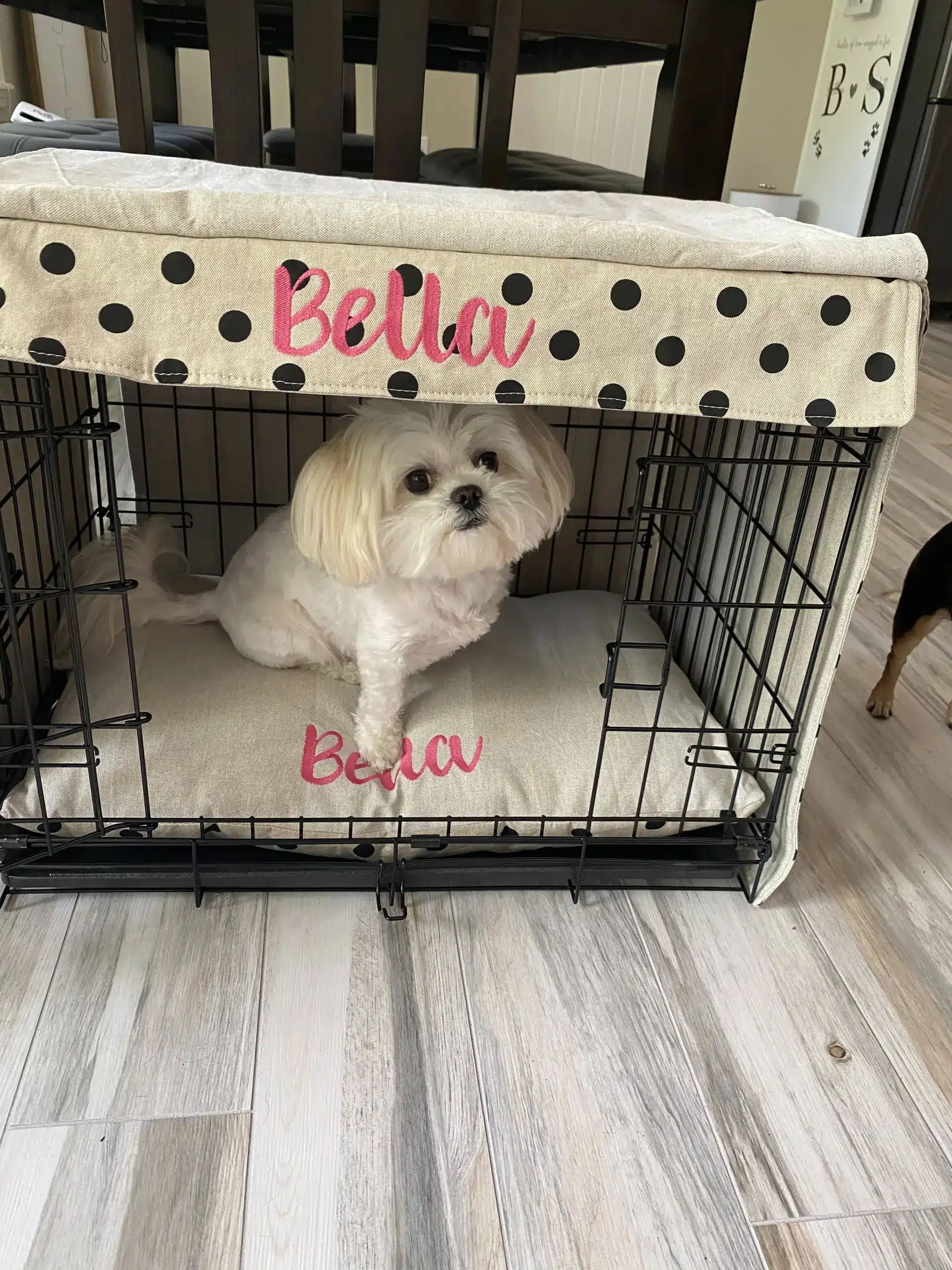
A personalized dog crate cover opens up structural possibilities. You can have panels that roll up and disappear neatly because they were measured to fit the space between the crate bars exactly. You can have corners that don’t gap or flare. These design elements are inherent to the construction, not just applied to the surface.
Why Certain Looks Fall Apart With One-Size-Fits-All Covers
The difference between a custom vs store bought crate cover is often most visible in how it holds its shape. A one-size-fits-all cover is designed to fit the largest possible variation of a “medium” crate. This means it is almost always baggy on most actual crates. This bagginess ruins the clean lines needed for a modern or tailored aesthetic.
Custom dog crate cover benefits extend to functionality that doubles as design. For instance, creating a “door” in the fabric that perfectly aligns with the side door of your specific crate model allows for a functionality that generic covers can’t match. It allows you to place the crate in specific orientations in your room without sacrificing access. This marriage of form and function—where the design works because the fit is perfect—is the ultimate luxury in pet product design. It’s a look that says “custom” in every stitch.
Common Questions About Custom Dog Crate Cover Design
What Style of Crate Cover Works Best in Modern Homes?
In modern homes, less is usually more. A cover with a structured fit, crisp corners, and a solid, neutral color tends to work best. Avoid frills, bows, or excessive piping. Look for fabrics like heavy canvas or linen blends in shades of grey, black, or white. The goal is to create a clean geometric shape that complements the simple lines of modern furniture.
How Do I Choose a Design That Won’t Feel Dated?
Stick to classic design principles. Neutral colors (beige, grey, navy, cream) and natural textures (cotton, linen, canvas) never go out of style. Avoid trendy patterns or colors that are having a “moment” unless you are willing to replace the cover in a year or two. A high-quality material in a timeless color will age gracefully and remain stylish for the life of the crate.
Why Do Custom Crate Covers Look More Finished?
Custom covers look more finished because they remove the visual “slop.” They are made to the exact dimensions of the crate, so there is no bunching fabric, no dragging hems, and no gaps. This precision mimics the look of upholstered furniture rather than a loose throw, creating a sense of permanence and quality that off-the-shelf options simply cannot replicate.
Give Your Pet the Comfort They Deserve
Crafted by hand, built to last, and designed to match your home. Create the perfect bed for your best friend.
Customize Their Bed
0 Comment