


For many pet owners, the crate is intended to be a place of rest—a quiet corner where a dog can decompress after a walk, settle down for the night, or stay safe while the family is out. Yet, for some dogs, the crate can become a source of visible stress. You might notice them pacing, panting, or remaining hyper-alert to every sound in the house. When a dog struggles to settle, it’s natural to wonder if the crate itself is the problem. Often, however, the issue isn’t the crate, but the environment surrounding it.
Anxiety in dogs is complex, and there is rarely a single magic solution. But the environment plays a massive role in how a dog feels and behaves. A standard wire crate, while excellent for safety and ventilation, leaves a dog completely exposed to the visual chaos of a busy home. Every person walking by, every shadow, and every movement is visible. For a dog that is already prone to being alert or anxious, this constant stream of visual input can make it nearly impossible to switch off.
This is where a crate cover serves a purpose far beyond aesthetics. By thoughtfully managing the sensory input your dog receives, a cover acts as an environmental buffer. It transforms a cage into a den, helping to lower arousal levels and create a space where rest feels possible. But not all covers achieve this equally. The difference between a makeshift blanket and a custom-designed cover can be significant when it comes to creating a truly calming atmosphere.
What Overstimulation Can Look Like Inside a Dog Crate
To understand how a cover helps, we first need to look at what is happening when a dog is struggling inside a crate. We often label a dog “anxious” or “stubborn” when they won’t settle, but frequently, they are simply overstimulated. A wire crate is essentially a room with transparent walls. Imagine trying to sleep in a glass box in the middle of a busy train station. You might be safe, but your brain would struggle to ignore the movement around you.
Overstimulation in a crate doesn’t always look like frantic barking or pawing at the door. Sometimes the signs are much subtler. A dog might lie down but keep their head up, eyes darting to follow family members as they move through the room. They might shift positions constantly, unable to get comfortable. They might whine softly or lick their lips repeatedly. These are signs of a brain that is “on”—constantly processing data and unable to transition into a rest state. This state of hyper-arousal is exhausting, and over time, it can lead to negative associations with the crate itself.
Movement, Noise, and Visual Input That Make It Hard to Settle
The modern home is a busy ecosystem. Even when we think things are quiet, there is often a lot happening from a dog’s perspective.
Visual Triggers: Visual input is a primary trigger for many dogs. Seeing a cat walk by, watching kids play in the adjacent room, or even just seeing a delivery truck through a window can spike adrenaline. In an uncovered crate, the dog has a 360-degree view of all these triggers. They feel compelled to monitor their surroundings because they can see everything. This monitoring behavior prevents deep sleep.
The “FOMO” Factor: Dogs are social creatures. If they are in a crate in the living room and can see the family eating dinner or watching TV, the frustration of being separated but visible can cause stress. This “fear of missing out” (FOMO) often manifests as whining or barking. A dog who can see the fun but can’t join in is likely to feel more anxious than a dog who is in a visually quiet space where the expectation is simply to rest.
Light and Shadows: Even at night, light can be a disruptor. Streetlights through a window, the flicker of a television, or hallway lights turning on and off can startle a resting dog. For a dog already prone to dog crate anxiety, these sudden changes in light can keep them on edge, anticipating that something is about to happen.
How a Crate Cover Helps Regulate the Environment
Regulating the environment is one of the most effective ways to support a dog who struggles to settle. This is where a crate cover functions as a tool for well-being. By reducing the amount of sensory information the dog has to process, you lower the cognitive load. You are essentially telling their brain, “You don’t need to watch the door. You don’t need to track the cat. You can just be.”
A cover creates a visual barrier. It signals a transition from “active time” to “quiet time.” Just as we might close the blinds or dim the lights to help ourselves relax, a crate cover dampens the intensity of the outside world. It creates a consistent, predictable environment inside the crate, regardless of what is happening outside of it. This consistency is incredibly comforting to dogs, who thrive on routine and predictability.
Reducing Visual Triggers Without Fully Closing the Space
It is a common misconception that a calming crate cover needs to be a blackout tent. In fact, fully closing off a dog who is anxious can sometimes have the opposite effect, making them feel trapped or isolated. The goal is to reduce triggers, not eliminate all contact.
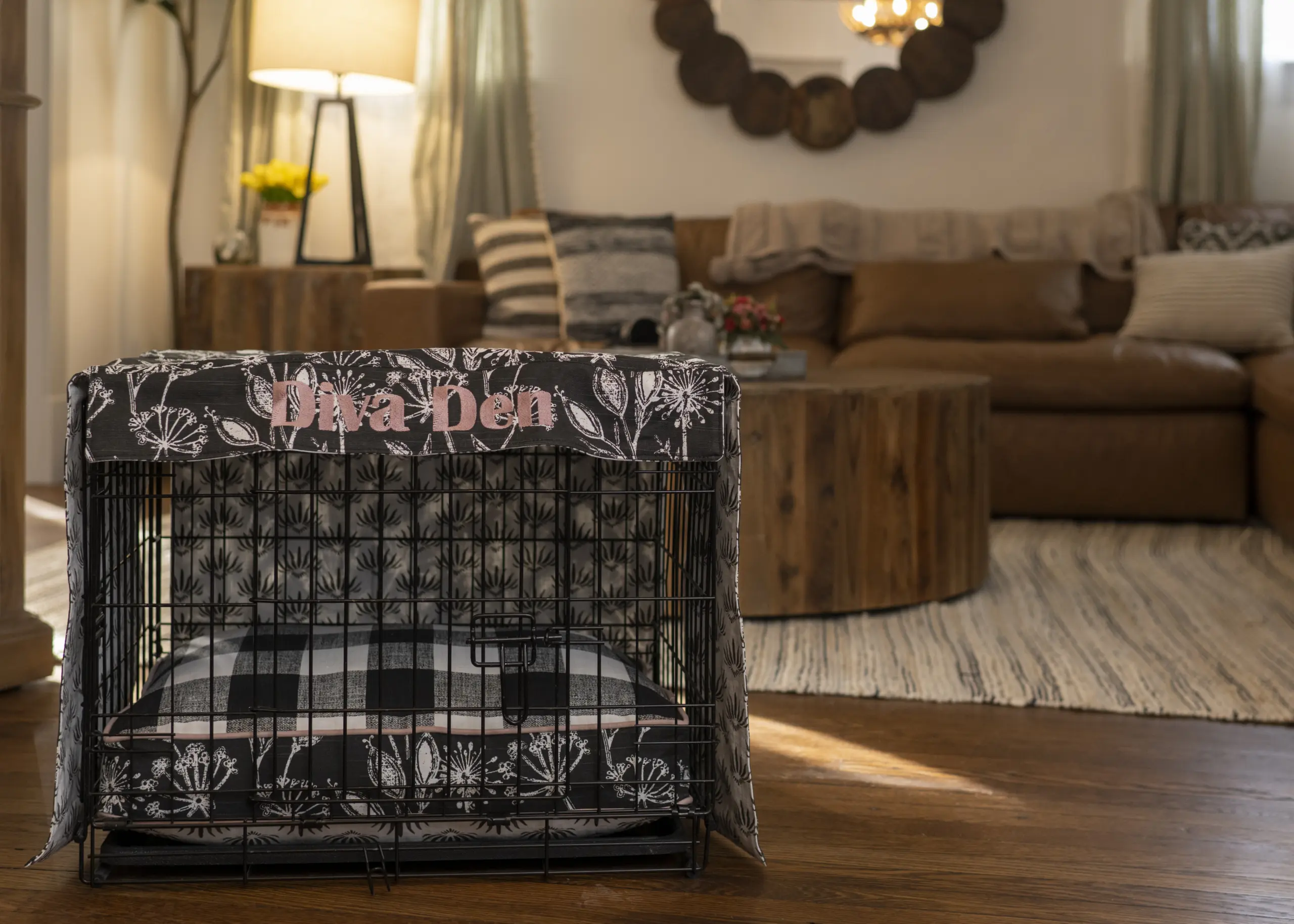
A well-designed cover allows you to modulate the visual input. You might cover the sides and back to create a sense of protection and “wall,” while leaving the front panel open or partially rolled up. This blocks the peripheral distractions—the movement on the sides—that often trigger a chase or alert response, while still allowing the dog to see out and know you are nearby.
For a dog crate cover for anxiety, this flexibility is key. You can adjust the environment based on the dog’s current state. If the house is chaotic with guests, you might lower the side panels to create a cozy bunker. If it’s a quiet Tuesday morning, you might roll them up to let in light. This control allows you to act as a thermostat for your dog’s environment, dialing the stimulation up or down as needed to help them maintain a calm baseline.
Why Fit and Airflow Matter More Than Coverage Alone
When we talk about anxiety and crate covers, the conversation often stops at darkness. We assume that making it dark is the solution. However, environmental stress isn’t just about what a dog sees; it’s about how they feel physically. A stuffy, hot, or claustrophobic crate will induce stress faster than a visual trigger ever could. If a dog feels physically uncomfortable, they cannot relax mentally.
This is why the physical properties of the cover—specifically fit and breathability—are critical components of a calming setup. A dog’s body temperature runs higher than ours, and they release heat primarily through panting. In a small, enclosed space like a crate, heat can build up quickly if there is no airflow. A dog that is overheating will become agitated, restless, and distressed. If you put a heavy blanket over a crate to “calm” a dog, you might inadvertently be creating a sauna that causes panic.
Creating Calm Without Restricting Comfort or Safety
To create a safe dog crate cover environment, we must prioritize air exchange.
Breathable Materials: The fabric choice is non-negotiable. It must be breathable. Natural fibers like heavy cotton canvas or linen blends allow air to pass through the weave. Unlike synthetic polyester or coated fabrics which trap heat and moisture, canvas breathes. This ensures that the air inside the crate remains fresh and the temperature stays regulated, even when the panels are lowered.
Gap for Circulation: A crucial aspect of dog crate cover airflow is the space between the fabric and the crate. A properly fitted cover should hang straight and taut. It should not cling to the wires or droop into the crate interior. This structural gap allows air to circulate around the perimeter of the crate, entering through the bottom and venting through the fabric.
Structural Integrity: A cover that holds its shape provides a sense of roominess. It defines the boundary of the “den” without collapsing in on the dog. This is vital for nervous dogs who might feel trapped by fabric that sags or billows. By maintaining a structured, airy interior, you provide the security of a den without the confinement of a cocoon, striking the perfect balance for a dog that needs to feel safe but free.
Where Generic Covers Often Miss the Mark
Many pet owners start with a generic solution—an old sheet, a large towel, or a “universal” crate cover bought online. While the intention is good, the execution of these makeshift solutions often contributes to the very anxiety they are trying to solve.
Generic covers are designed for manufacturing efficiency, not canine psychology. They are often made of thin, slippery polyester that rustles loudly whenever the dog moves or the air conditioner turns on. For a noise-sensitive dog, this constant “swish-swish” sound can be startling. They are typically “one size fits all,” which in practice means “one size fits none.” They are baggy, prone to slipping off, and often lack the necessary ventilation or panel controls to be truly effective tools for regulation.
Common Design Issues That Can Add Stress Instead of Reducing It
The flaws in generic designs create specific friction points that can increase a dog’s stress levels.
The “Cave-In” Effect: Generic covers made of flimsy fabric tend to sag in the middle and droop on the sides. This reduces the usable headspace inside the crate and can make the environment feel oppressive. A dog standing up might brush their head against sagging fabric, which can be startling.
Poor Ventilation: Many inexpensive covers are made of coated nylon or polyester to be “easy wipe.” While convenient for cleaning, these materials act like plastic wrap, trapping heat and humidity. A dog crate cover problem like this is serious; a hot dog is an anxious dog.
Lack of Visibility Control: Most generic covers offer a binary choice: completely open or completely closed. They typically lack the ability to secure panels at different heights or roll them up neatly. This forces the owner to choose between full exposure (triggers) or full isolation (potential distress), with no middle ground for gradual adjustment.
Slipping and sliding: Without a tailored fit, generic covers slide around. If a dog paws at the crate, the cover can be pulled inside, creating a tangle hazard or simply a messy, chaotic environment that feels unstable. Stability is a core component of security; a cover that moves unpredictably undermines that feeling.
Why Custom Design Helps Avoid Those Mistakes
The shift to a custom crate cover is often a turning point for pet owners managing an anxious dog. It’s not just an aesthetic upgrade; it’s a functional one. Custom design allows you to eliminate the variables that cause stress—the heat, the noise, the sagging fabric—and focus entirely on creating a supportive environment.
When you choose a custom design, you are making intentional decisions about how the crate will function in your specific home and for your specific dog. You move from a passive solution (“throwing a blanket over it”) to an active one (“designing a calm space”). This intentionality translates into a product that works with the dog’s needs rather than against them.
Intentional Fit, Fabric Choice, and Balanced Coverage
A custom dog crate cover addresses the anxiety equation through three main pillars: fit, fabric, and function.
Tailored for Stability: A made-to-order crate cover fits the crate’s exact dimensions. The corners align perfectly with the crate frame. The panels are weighted and structured so they hang straight. There is no excess fabric to flap, rustle, or sag. This creates a solid, architectural feel to the crate. It feels permanent and safe, like a real wall, rather than a temporary tent.
Material for Quiet and Cool: With custom options, you can select heavyweight, natural fabrics. A dense cotton canvas or upholstery-weight linen has sound-dampening qualities that thin polyester lacks. It muffles the sharp, metallic sounds of claws on the crate tray or the click of the latch. It breathes, ensuring the dog stays cool. It feels substantial.
Balanced Coverage: Customization allows for features like individually operational panels. You can design a cover where the side panels roll up independently of the front door. This granular control allows you to “tune” the crate to your dog’s anxiety level. You might keep the side facing the busy hallway down, but roll up the side facing the quiet wall for airflow. You can create a “window” for them to see you without exposing them to the whole room. This balance—protection without isolation—is the sweet spot for reducing anxiety.
Questions Pet Owners Ask About Crate Covers and Anxiety
Can a Crate Cover Help an Anxious Dog Feel More Secure?
Yes, for many dogs, a crate cover is a helpful tool for building security. Dogs are naturally denning animals, and open wire crates can feel unnaturally exposed. A cover simulates the protected feeling of a den, reducing the need for the dog to stay hyper-vigilant. By blocking visual triggers and creating a cozy, defined boundary, a cover helps signal that the crate is a place for rest, not for guarding or monitoring the house. However, it is important to introduce the cover gradually and monitor your dog’s reaction to ensure it creates a positive association.
How Much of a Dog Crate Should Be Covered?
There is no single rule, as every dog is different. A good starting point is to cover the top, back, and two sides, leaving the front door open. This provides a “cave” feeling while allowing the dog to see out and exit easily if the door is open. Monitor your dog: if they settle well, you might try lowering the front panel at night. If they seem distressed or try to pull the cover in, they may prefer more visibility. The goal is to find the balance where the dog settles quickly and breathes easily.
What Makes a Crate Cover Calming Rather Than Overwhelming?
A calming crate cover is one that regulates the environment without creating physical stress. Key factors include breathability (to prevent overheating), structure (to prevent the fabric from collapsing on the dog), and adjustability (to control light and visibility). A cover becomes overwhelming if it traps heat, completely isolates the dog from the family when they aren’t ready, or moves unpredictably. A calming cover feels stable, cool, and safe.
Give Your Pet the Comfort They Deserve
Crafted by hand, built to last, and designed to match your home. Create the perfect bed for your best friend.
Customize Their Bed
0 Comment