


Bringing a puppy home is a chaotic, joyful, and often surprising experience. You prepare for the house training and the boundless energy, but nothing quite prepares you for the sheer determination of a puppy to put absolutely everything in its mouth. Shoes, furniture legs, remote controls, and yes, even their own crate, become targets for those tiny, sharp teeth.
When you’re trying to create a calm, beautiful den for your new family member, this chewing phase can feel frustrating. You want to give them a cozy, covered space, but you’re worried they’ll destroy it or, worse, ingest something they shouldn’t. It’s a common dilemma, and it leads many new pet owners to wonder if a crate cover is even a good idea for a young, mouthy puppy.
The truth is, navigating this stage isn’t about finding an indestructible product. It’s about understanding the behavior, making smart design choices, and setting realistic expectations. With the right approach, you can create a safe, stylish space that supports your puppy’s training and eventually becomes the peaceful retreat you both want it to be.
Why Puppies Test Everything With Their Mouths
Before we talk about solutions, it’s important to understand the “why” behind the chewing. It’s easy to see it as destructive, but for a puppy, it’s a fundamental part of how they learn about the world. Their mouths are like our hands—they use them to explore textures, shapes, and tastes.
Exploration, Teething, and Curiosity—Not “Bad Behavior”
Puppy chewing behavior is driven by a few key developmental needs. First, there’s teething. Just like human babies, puppies experience discomfort as their adult teeth come in. The pressure of chewing helps alleviate the pain in their gums. This phase is intense and can make them seem like little chewing machines.
Second is exploration. A puppy has no frame of reference for what a table leg is versus a chew toy. They investigate by gnawing. Is it hard? Is it soft? Does it feel good to bite? This is their way of gathering data about their environment. It isn’t malicious or a sign of a “bad dog”; it’s a sign of a curious, developing mind.
Why the Crate Becomes a Target in Early Stages
The crate is a puppy’s first bedroom. They spend a significant amount of time there, especially during house training and when unsupervised. It’s only natural that this confined space becomes a primary target for their oral fixation.
When a puppy is in their crate, they might chew out of boredom, mild anxiety, or simply because it’s the only thing available. The bars, the plastic tray, and any bedding or covers within reach become objects of intense interest. Puppy chewing crate issues are one of the most common puppy crate training challenges, and it’s a normal part of them learning their boundaries.
What Chewing Means for Crate Covers Specifically
When you introduce a crate cover into this equation, you add a new, tempting texture. The fabric edge, a hanging tie, or a loose corner can be an irresistible invitation for a teething puppy. This is where design and fit become critical for safety and longevity.
Fabric Within Reach vs. Fabric Designed to Be Out of Reach
The primary risk comes from any part of the cover the puppy can pull inside the crate. If they can grab a corner with their teeth, they can drag a significant amount of fabric through the bars. This is the difference between a puppy crate cover that is safe and one that poses a risk.
A properly designed cover minimizes these access points. It fits snugly, without loose overhangs or dangling elements. The goal is to create a cover that functions as the “walls” of the den, remaining outside the puppy’s immediate reach, rather than a loose blanket they can interact with.
Why No Fabric Is Truly “Chew-Proof”
Let’s be clear about one thing: there is no such thing as a truly “chew-proof” fabric. A determined dog with enough time and motivation can destroy almost anything. The term “chew-proof crate cover” is a myth.
Even the most durable dog crate cover has its limits. A heavy canvas might resist a casual nibble, but it won’t stand up to a persistent, focused chewing session. Crate cover durability is about resistance and longevity under normal use, not indestructibility against a determined chewer. The focus should be on minimizing the opportunity to chew in the first place.
Understanding Fabric Durability Without Overpromising
While no fabric is invincible, some are certainly better suited for the puppy phase than others. Understanding what “durable” actually means can help you make a more informed choice and set realistic expectations.
What Durable Fabrics Can Handle—and What They Can’t
A durable crate cover fabric like a heavyweight cotton canvas or duck cloth is designed to be abrasion-resistant. It can handle a dog leaning against it, scratching at it, or giving it a quick test nibble without tearing. It’s built to withstand the friction of daily life and repeated washing.
What it can’t handle is being used as a chew toy. If a puppy can get a corner of even a heavy duty dog crate cover in its mouth and work on it for an hour, it will eventually break down the fibers. The best fabric for a puppy crate cover is one that is tough, but its toughness is a secondary defense. The primary defense is a design that keeps the fabric out of their mouth.
Why Thickness Alone Doesn’t Prevent Chewing
There’s a common misconception that a thick crate cover is automatically more chew-resistant. While a thicker fabric is generally stronger, thickness alone is not a deterrent. In fact, a thick, soft fabric might feel even more satisfying for a teething puppy to sink their teeth into.
The structure of the weave matters more than the bulk of the dog crate cover material. A tight, dense weave is harder for a puppy to get a purchase on. The fibers are locked together, making it more difficult to pull threads loose. Crate cover fabric behavior is complex; a material that feels tough to our hands might feel perfect to a puppy’s gums.
Design Considerations That Reduce Chewing Opportunities
Since we can’t rely on fabric alone to be chew-proof, the most effective strategy is smart design. A cover that is engineered to minimize access is inherently safer and more durable for a chewing puppy.
Keeping Edges, Corners, and Panels Out of Reach
The most vulnerable parts of any cover are the edges. The hem at the bottom, the corners where panels meet, and the edges of the roll-up doors are the easiest things for a puppy to grab.
A safe puppy crate cover is designed with this in mind. The hem should be short enough that it doesn’t puddle on the floor where it can be pulled in. The door panels, when rolled up, should be secured tightly and high enough to be out of reach. Crate cover panel design should focus on clean lines and minimal excess fabric.
Why Fit Matters More With Puppies Than Adult Dogs
For an adult dog, a slightly loose fit might just be an aesthetic issue. For a puppy, it’s a safety hazard. Every bit of loose, sagging fabric is a potential handhold for their teeth.
A custom dog crate cover fit is the single most important feature for a puppy. When a cover is tailored to the exact dimensions of the crate, it fits like a second skin. There are no gaps for them to exploit, no droopy top panel to pull down. Crate cover fit issues are magnified during the puppy stage, where a small flaw in fit can lead to a big problem. A made to measure crate cover eliminates the slack that puppies love to target.
Common Crate Cover Mistakes With Chewing Puppies
Many well-intentioned puppy owners make a few common mistakes when trying to create a den-like environment. These mistakes often inadvertently encourage the very chewing behavior they are trying to avoid.
Loose Fabric, Overhang, and Blanket Substitutes
The most common mistake is using a blanket or a poorly fitting cover. A blanket vs crate cover comparison makes this clear: a blanket is designed to be moved and manipulated. A puppy will almost certainly pull it into the crate, chew it, and get tangled in it.
Similarly, a cover with a long overhang is an open invitation. This is where DIY crate cover problems often arise. Without professional patterning, it’s difficult to get the fit just right, resulting in tempting loose fabric. These crate cover chewing issues are often a direct result of providing easy access.
Introducing Covers Too Early in the Training Process
A crate cover is a wonderful tool, but timing is everything. Throwing a cover over the crate on day one before the puppy is comfortable with the crate itself can create anxiety, which often manifests as chewing.
Puppy crate training tips often emphasize making the crate a positive, safe space first. This means associating the crate with treats, toys, and happy experiences before you change the environment by covering it. When to use a crate cover is a strategic decision. Rushing the crate cover timing for puppies can backfire, teaching them that the cover is something to be fought with.
When It Makes Sense to Delay Using a Crate Cover
Sometimes, the smartest decision is to wait. For a particularly intense chewer or a puppy in the throes of teething, a bare crate might be the safest option for a short period. This allows you to focus on the foundations of crate training without the added variable of a cover.
Early Crate Training vs Environmental Control
The first goal of crate training a puppy is to make them love their crate. This is about positive reinforcement, not just environmental control. You want them to go into their crate willingly, not just because it’s a dark box.
Focusing on the puppy crate setup without a cover initially allows you to see their behavior clearly. Are they settling down, or are they anxiously pacing? Are they playing with their toys, or are they trying to bite the bars? This gives you valuable information about their comfort level in the crate training environment.
Signs a Puppy Isn’t Ready for a Cover Yet
So, how do you know if it’s too soon? Watch for these puppy crate behavior signals:
- Persistent Bar Biting: If they are constantly chewing on the metal bars, they will absolutely chew on a fabric cover.
- Frantic Digging: If they are digging obsessively at the plastic tray, they are in a high-arousal state and not ready to have fabric introduced.
- Destroying Bedding: If they shred every bed or blanket you put in the crate, they see fabric as a toy.
These puppy chewing warning signs indicate that you need to work more on making the crate a calm space before adding a cover. Crate training readiness is about their emotional state, not just their age.
How to Introduce a Crate Cover More Successfully
When your puppy seems comfortable and calm in their bare crate, you can begin to introduce a cover. The key is to do it gradually and with supervision, turning it into another positive part of their routine.
Gradual Coverage Instead of Full Enclosure
Don’t go from a completely open crate to a fully covered one in a single step. Start with a partial crate cover. Drape the cover over the back and top, leaving the sides and front open. Let them get used to this for a few days.
Then, you can try covering the sides, still leaving the front door panel open. This dog crate cover adjustment allows the puppy to acclimate to the change slowly, reducing the chance that they will see the cover as a scary or threatening new thing. The goal is a gentle crate cover introduction.
Pairing Covers With Supervision and Routine
When you first fully cover the crate, do it during a supervised naptime. Stay in the room and listen. If you hear chewing, give a calm verbal correction. This teaches them the cover is not a toy.
Associate the cover with the calmest parts of their crate training routine. Cover the crate for naps and at bedtime, and pair it with a high-value chew toy (like a frozen Kong) that is far more interesting than the fabric. This positive association is critical for creating a safe crate setup for your puppy.
Why Custom Covers Offer Better Control for Chewing Stages
While you can take precautions with any cover, a custom-made piece gives you a significant advantage during the challenging puppy phase. This is because it allows you to control the one factor that matters most: fit.
Precision Fit Reduces Access Points
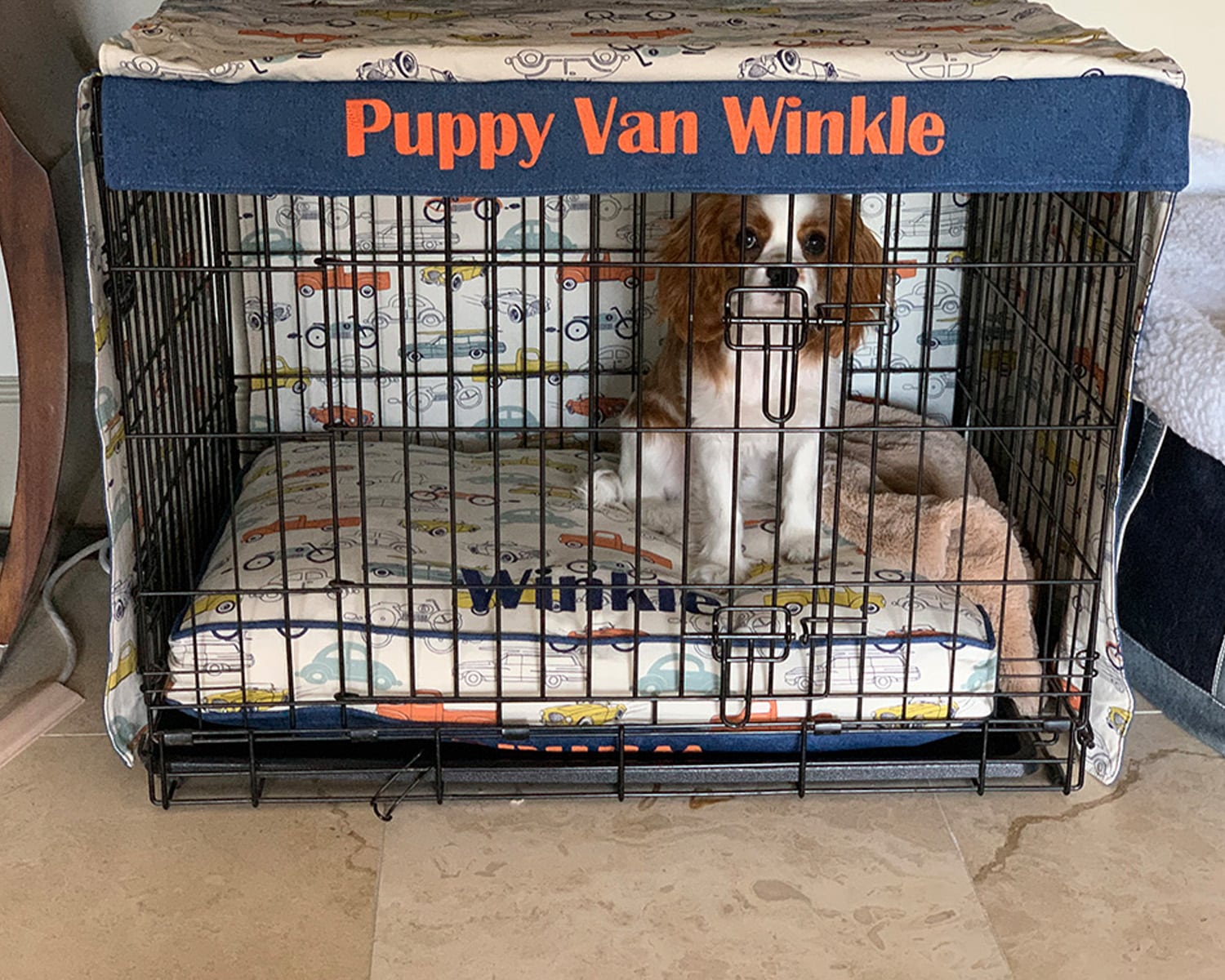
A custom dog crate cover is made to the exact millimeter of your crate’s dimensions. This precision fit is your best defense against chewing. There is no slack, no droop, and no overhang. The fabric is held taut against the frame, making it incredibly difficult for a puppy to get a purchase on it.
A tailored crate cover hugs the corners and follows the lines of the crate perfectly. By eliminating these access points, you are removing the temptation. A crate cover made to order is an exercise in preventative design.
Designing Coverage That Can Adapt as Puppies Grow
Puppies change. Their needs change. A great benefit of a custom process is that you can design for the future. You can choose a durable fabric that will last into adulthood and a panel configuration that gives you options.
For example, you might start by only rolling down two panels and leaving the others up. As your puppy matures and their chewing subsides, you can start using the other panels. An adjustable crate cover design offers flexibility. The custom crate cover benefits extend beyond just the initial fit; they provide a long term crate cover use plan that adapts with your dog.
Balancing Realistic Expectations With Long-Term Planning
The puppy chewing phase can feel endless, but it is temporary. It’s a stage you manage, not a permanent personality trait. Keeping this perspective is crucial as you make design choices for your home.
Why Some Stages Are Temporary—and Design Still Matters
While you are managing the chewing, you are also living in your home. Looking at a messy, half-destroyed crate setup can add to the stress of puppy ownership. Puppy growth stages pass, but your desire for a calm and beautiful home does not.
This is why design still matters, even in the messy phases. Choosing a long lasting dog crate cover in a timeless fabric is an act of faith in the well-behaved adult dog you are raising. It’s about planning for the future while managing the present.
Planning for the Dog You’re Raising, Not Just the Puppy Stage
A high-quality cover is a dog crate cover investment. It’s a piece of furniture that should last for the life of your dog. By choosing a well-made, custom piece from the start, you avoid the cycle of buying and replacing cheap, temporary solutions.
The custom crate cover value is realized over years of use. It will be there long after the teething has stopped. Planning for the adult dog and managing the puppy stage are two sides of the same coin. Crate cover longevity is the reward for thoughtful planning.
Common Questions About Crate Covers and Chewing Puppies
Is It Safe to Use a Crate Cover With a Chewing Puppy?
It can be, with proper supervision and a correctly fitted cover. Never leave a puppy who is a known, persistent chewer unsupervised with a new cover for long periods. Safety comes from a combination of a snug-fitting design that minimizes access and a gradual introduction process.
What Fabrics Hold Up Best With Teething Puppies?
Heavyweight, tightly woven natural fabrics like cotton canvas or duck cloth are the most durable choices. They resist abrasion and are harder for a puppy to get a tooth into compared to thin or loosely woven materials. However, no fabric is indestructible.
When Should You Introduce a Crate Cover to a Puppy?
You should introduce it only after the puppy is comfortable and calm in their bare crate. They should see the crate as a safe, positive space first. Wait until the most intense phase of teething has started to subside and they have shown they can be in the crate without frantically chewing on the bars or tray.
Can a Custom Cover Help Reduce Chewing?
Yes, by minimizing opportunity. A custom cover’s primary benefit is its precision fit, which eliminates the loose fabric and gaps that puppies target. While it can’t stop a determined chewer, it removes the “low-hanging fruit,” making it much less likely for chewing to start in the first place.
Give Your Pet the Comfort They Deserve
Crafted by hand, built to last, and designed to match your home. Create the perfect bed for your best friend.
Customize Their Bed
0 Comment