



If you’ve recently brought a dog crate into your home, you might be looking at it and thinking it needs… something. For many, a bare wire crate can feel a bit stark and out of place with home decor. More importantly, it can feel too exposed for a dog who needs a quiet place to settle. The impulse to soften its edges and create a cozier, den-like space is a natural one.
For a lot of pet owners, the first stop on this journey is a do-it-yourself solution. It seems simple enough: find a piece of fabric, drape it over the top, and you’re done. The appeal is understandable. It’s a quick project that promises to solve a problem without a lot of fuss.
This process of experimentation is often how we discover what our dogs truly need. You might try a few different approaches, learning with each attempt what works and what doesn’t. A DIY project can be an excellent way to explore the concept of a crate cover and see if it’s a good fit for your dog and your home. Let us show you some ideas, the common learning curves, and where the DIY journey often leads.
Why So Many Pet Owners Start With DIY Crate Covers
The path to a DIY dog crate cover is well-worn. It’s often the first idea that comes to mind when you decide the crate needs an upgrade. There’s a certain satisfaction that comes from creating something with your own hands, especially when it’s for a beloved pet. Beyond the creative impulse, there are a few practical reasons why so many people start here.
It feels like a straightforward, low-stakes project. You see a problem—the crate looks cold or your dog seems restless—and you see an immediate, accessible solution. You have blankets, sheets, and towels already in your home. The barrier to entry is virtually zero. You don’t need special skills or a big budget to get started, which makes it an attractive starting point for anyone looking to make a quick change.
This hands-on approach is often driven by a desire to provide immediate comfort for a pet. When you see your dog struggling to settle, you want to help right away. A homemade dog crate cover feels like a direct and caring response to that need.
Cost, Convenience, and the Appeal of Doing It Yourself
The decision to make your own dog crate cover usually boils down to three main motivators.
Cost: The most obvious driver is budget. A custom-made product is an investment, and it’s not always one people are ready to make, especially if they’re new to crate training or unsure if their dog will even like being covered. Using a blanket or sheet you already own is free. Even buying fabric for a simple sewing project can feel more economical than purchasing a finished product. It’s a way to test the waters without a financial commitment.
Convenience: The need for a solution is often immediate. Maybe you have guests coming over and want to tidy up the look of the crate, or your puppy is going through a particularly restless phase. You can create a DIY cover in minutes. There’s no need to research brands, measure precisely, or wait for shipping. The convenience of grabbing a quilt from the closet and having an instant fix is powerful.
The Appeal of a Personal Touch: For many, the “do-it-yourself” spirit is about more than just saving money. It’s about personalization and the satisfaction of a home project. You get to choose the exact fabric and feel like you’ve put your own touch on your pet’s space. There’s a sense of pride in pointing to something and saying, “I made that.”
What Most Beginners Don’t Realize at First
The initial attempt at a DIY cover is usually full of optimism. You drape a beautiful blanket over the crate, step back, and admire your work. It looks cozy, and for a few hours, it might even work perfectly. However, the reality of daily life with a dog often reveals the hidden complexities of this seemingly simple project.
What looks good in a static photo doesn’t always hold up to a dog shifting inside, a wagging tail bumping the sides, or the simple act of opening and closing the crate door multiple times a day. The initial neatness can quickly devolve into a constant state of readjustment.
This is where many beginners encounter the gap between a great idea and a functional design. The properties of fabric, the importance of a precise fit, and the need for safe ventilation are not always obvious until you see a DIY solution fail in real time.
Fit, Fabric Behavior, and Everyday Use Add Up Quickly
The challenges of a homemade cover often appear in small, frustrating increments. These are the common DIY crate cover mistakes that many people only discover through trial and error.
Fit and Sizing Issues: Guessing the dimensions is the first hurdle. A fabric that’s too small will leave awkward gaps, while one that’s too large will puddle on the floor, collecting dust and looking messy. Without a tailored fit, the cover will inevitably slide around. A dog nudging the side of the crate can pull the whole thing askew, defeating the purpose of creating a stable, secure-feeling den. This constant need to straighten it can become a surprising source of daily frustration.
Fabric Behavior: Not all fabrics are created equal. A stretchy jersey knit will sag in the middle. A slippery satin will slide off with the slightest movement. A heavy wool blanket might seem cozy, but it can trap an alarming amount of heat. Understanding how a textile hangs, breathes, and holds its shape is crucial, and it’s one of the key crate cover beginner tips that often gets overlooked.
Everyday Use: How will you open the door? Do you have to lift the entire cover off every time? A simple blanket offers no easy way to access the crate door, turning a simple task into a clumsy two-handed operation. This seemingly small inconvenience adds up quickly over days and weeks.
Simple No-Sew Crate Cover Ideas to Try First
If you’re curious about covering your dog’s crate but aren’t ready to commit to a sewing project or a purchase, no-sew options are a great place to start. These methods are all about working with materials you likely have on hand. They are low-commitment experiments to see how your dog responds to a covered environment.
Think of these as temporary dog crate cover ideas. They are perfect for a weekend trip, for use during a thunderstorm, or simply to test the concept for a few days. The goal here is observation. Does your dog seem calmer? Do they settle faster? Does the reduced visual stimulation help?
Remember, with any of these methods, safety comes first. Always use breathable fabrics, never block all sides of the crate completely, and supervise your dog to ensure they are comfortable and not overheating.
Low-Commitment Options Using Everyday Materials
Here are a few easy DIY dog crate cover ideas to get you started:
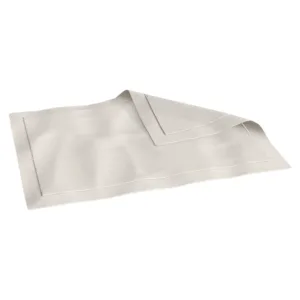
The Classic Drape: This is the simplest method. Take a large, breathable blanket or a flat sheet (cotton or linen blends are great) and drape it over the crate. You can cover the top and three sides, leaving the door-side completely open for airflow and visibility. The downside is that it will shift easily, but it’s the quickest way to see if your dog appreciates a den-like feel.
The Binder Clip Method: To solve the shifting problem of the classic drape, use large binder clips or clamps from a hardware store. After draping the fabric, use the clips to secure the edges to the wire of the crate. This keeps the fabric from sliding off and gives it a slightly more structured look. You can even use clips to hold the front panel rolled up for easy door access.
The Plywood Top: For a more stable no-sew dog crate cover, get a thin piece of plywood cut to the exact dimensions of the crate’s top. Sand the edges smooth. You can then lay the wood on top and drape your fabric over it. The solid top prevents sagging in the middle and gives the whole setup a cleaner line. The fabric will still be loose on the sides, but the top will be neat and can even serve as a usable surface for light items.
Where DIY Crate Covers Usually Fall Short Over Time
While a DIY cover is an excellent starting point, many pet owners find that their homemade solutions have a limited lifespan. The initial satisfaction can slowly give way to the practical frustrations of a design that isn’t built for long-term use. The things that seemed like minor inconveniences at first can become daily annoyances.
The core issue is that temporary materials are being asked to do the job of a permanent, structural product. A blanket is designed to be soft and pliable, not to hold a rigid shape. A sheet is made to be lightweight, not to withstand the friction of a metal crate door opening and closing.
Over time, these material limitations become clear. The DIY cover that looked great on day one can start to look perpetually messy, and its functional shortcomings can impact safety and convenience.
Shifting Fabric, Limited Airflow, and Inconsistent Results
Most DIY dog crate cover problems stem from a few common issues that are difficult to solve without proper construction.
The Constant Readjustment: A draped blanket vs. crate cover shows this difference clearly. A fitted cover stays put. A blanket requires constant fiddling. It slips, it gets pulled into the crate, and it never looks quite as neat as it did when you first arranged it. This lack of stability undermines the goal of creating a predictable, calming space for your dog.
Limited and Unsafe Airflow: This is the most serious concern. To prevent a blanket from slipping, you might be tempted to tuck it in tightly or use a heavy, non-breathable comforter. This can severely restrict dog crate cover airflow, creating a stuffy and potentially dangerously hot environment. Without intentionally designed vents or panels made of breathable fabric, ensuring proper ventilation with a DIY setup is mostly guesswork.
Inconsistent Results: Your DIY setup may work well one day and fail the next. A change in humidity can make a cotton sheet sag, or a different dog sitter might not know how to arrange the blanket correctly. This lack of consistency can be confusing for a dog who thrives on routine.
When a Custom Crate Cover Saves Time and Frustration
There often comes a point in the DIY journey where you realize that the time and mental energy you’re spending readjusting, worrying about, and fighting with your homemade cover is no longer worth it. You’ve proven the concept—your dog does benefit from a covered crate—but your current solution isn’t sustainable.
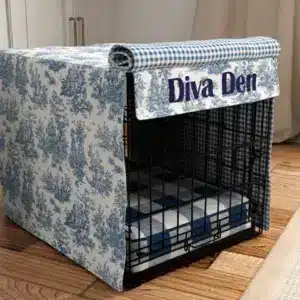
This is the moment when investing in a well-designed product shifts from feeling like an indulgence to feeling like a logical next step. A custom crate cover isn’t just a prettier version of your DIY attempt; it’s an engineered solution to the very problems you’ve been grappling with. It’s designed to provide the benefits of a cover without any of the daily frustrations.
The debate of custom vs. DIY dog crate cover often comes down to this: are you looking for a short-term experiment or a long-term, reliable solution? When you’re ready for the latter, a custom design becomes the clear choice.
Why Fit, Fabric Choice, and Finish Matter More Than Expected
A made-to-order crate cover addresses the pain points of DIY solutions with intentional craftsmanship.
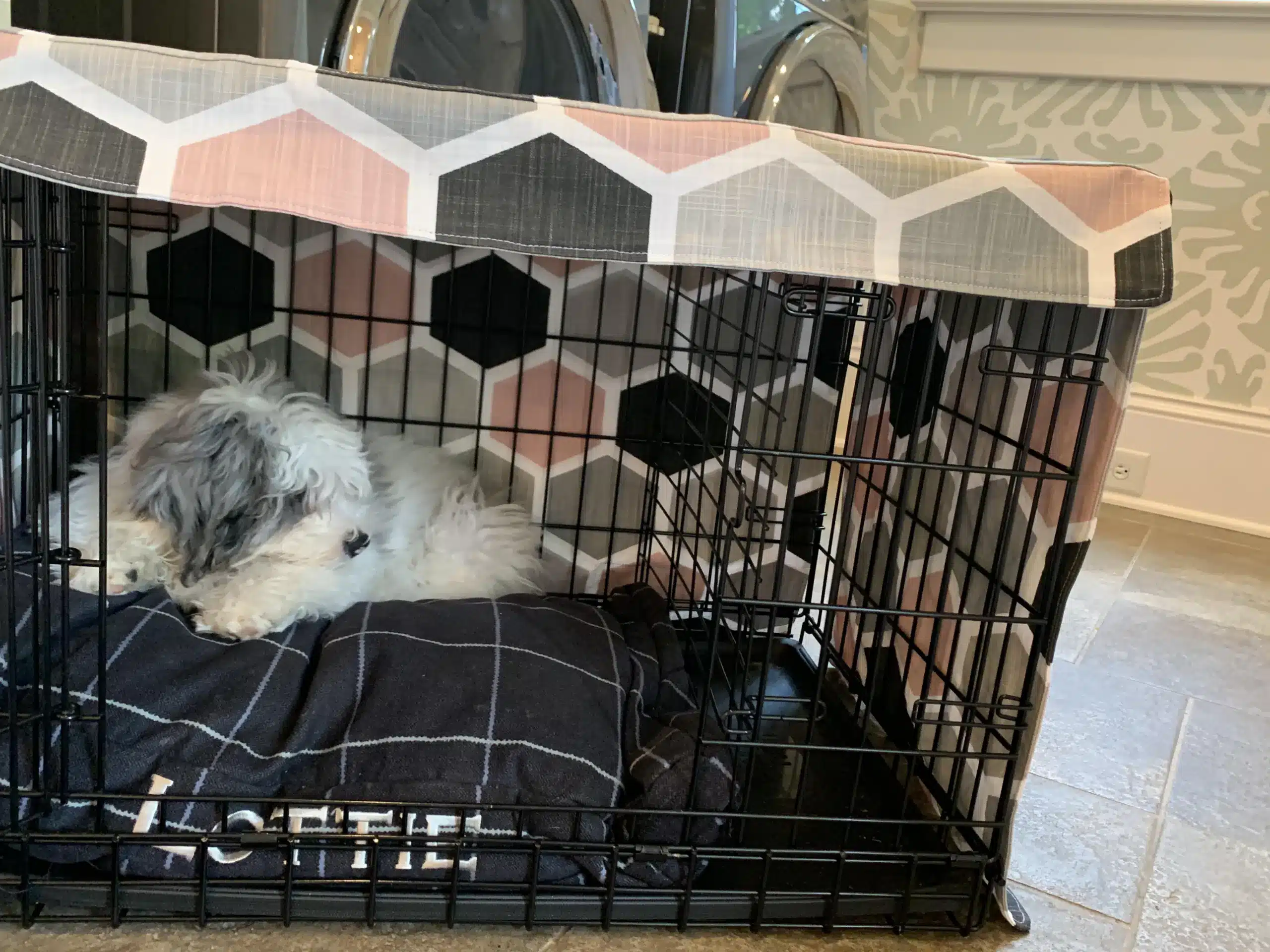
The Perfect Fit: A custom dog crate cover is tailored to the exact dimensions of your crate. It won’t slip, sag, or slide. The corners are crisp, the panels hang straight, and it stays put. This stability creates the consistent, predictable environment that a nervous dog needs to feel secure.
Intentional Fabric Choice: You can select a fabric based on its properties, not just its availability in your linen closet. Choosing a heavyweight, breathable cotton canvas, for example, solves the airflow and durability issues in one step. The material is chosen for the job it needs to do.
A Professional Finish: The details matter. A custom cover has finished seams, proper closures for the roll-up panels, and a weighted hem that helps it hang beautifully. The front panel is designed to roll up and secure neatly, so accessing the crate door is effortless. These finishing touches are what elevate the product from a temporary fix to a permanent, functional piece of furniture in your home.
Common Questions Beginners Ask About DIY Dog Crate Covers
Is It Hard to Make a Dog Crate Cover Yourself?
If you’re an experienced sewer with a good machine, making a basic, fitted crate cover is a moderately challenging project. The difficulty lies in getting the measurements exactly right, working with heavy fabrics, and ensuring the corners are square so it hangs properly. For a beginner, it can be quite difficult to achieve a professional-looking result that is also safe and functional. No-sew options, however, are very easy but come with the functional trade-offs mentioned earlier.
What’s the Easiest DIY Crate Cover That Actually Works?
For a balance of ease and function, the “plywood top” method is often the most successful. Placing a solid, cut-to-size board on top of the crate instantly solves the problem of a sagging middle. You can then drape a breathable fabric over it. While the sides will still be loose, you can use binder clips to secure them. This creates a stable, clean look that is far more reliable than just a blanket alone and requires no sewing skills.
When Does DIY Stop Being Worth the Effort?
DIY stops being worth the effort when the time you spend maintaining it outweighs the initial savings. If you find yourself constantly readjusting the cover, worrying if it’s blocking airflow, or feeling frustrated every time you have to access the crate door, it’s a sign that your DIY solution has reached its limit. The goal is to reduce stress, not create a new daily chore for yourself. When the cover becomes a source of frustration, it’s time to consider a more permanent, well-designed solution.
0 Comment